This briefing is based on official announcements, vendor documentation, and news reports — we did not test these tools hands-on.
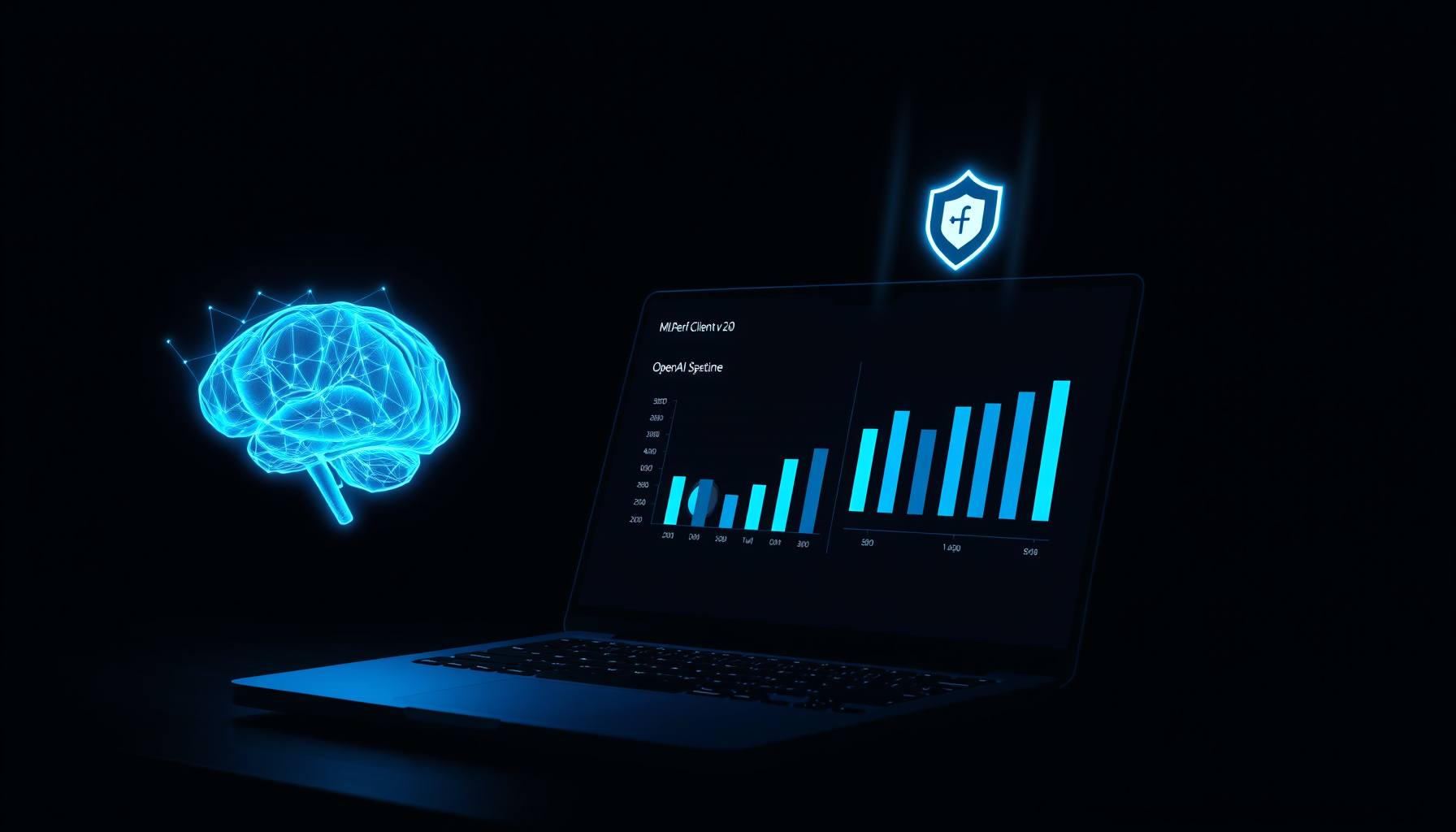
Do I need an AI PC to run AI locally? That’s the question behind MLPerf Client v2.0, announced by MLCommons on August 18-19, 2026, which brings agentic-AI and image-generation benchmarks to PCs. Separately, OpenAI announced on August 18, 2026 that it is pausing frontier training for two weeks over cyber-risk. Here’s what both mean for your tool choices.
Do I need an AI PC to run AI locally?
No — most beginners do not need an AI PC, because cloud tools run in any browser. But if you want free, private, offline AI, this new benchmark is how you choose a machine without trusting marketing labels. MLCommons announced MLPerf Client v2.0 on August 18-19, 2026 as the first neutral yardstick for AI PC performance. MLCommons announcement
What is MLPerf Client v2.0?
It’s a free, open-source test suite that measures how well laptops, desktops, and workstations run AI locally, reporting both responsiveness and throughput. MLCommons built it with AMD, Intel, Microsoft, NVIDIA, Qualcomm Technologies, and top PC OEMs. It runs on Windows, macOS, and Linux, and anyone can download it. MLCommons benchmark page GitHub releases
What’s new in MLPerf Client v2.0?
Two new categories plus an upgraded core test: an Agentic AI category that times Software Engineering and Data Analyst agents, splitting LLM inference from tool execution; an Image Generation category (Flux.2 klein 4B, experimental); and LLM tests upgraded from Phi 3.5 to Phi 4 Mini Instruct, with Qwen 3 8B and a ~4K-token summarization task added. MLCommons announcement AIThority
AI PC vs cheap laptop plus cloud: which should a beginner buy?
For most beginners, a cheap laptop plus a cloud subscription is the sensible default. For local AI, free runners like LM Studio and Ollama benefit from a benchmarked machine, while cloud chatbots like ChatGPT need no special hardware. Compare options at our comparisons hub. No laptop-specific MLPerf Client v2.0 results exist — treat this as a framework, not a shopping list.
Verdict: should beginners buy an AI PC because of MLPerf?
No rush — buy only if you already want local, private, offline AI; otherwise a cheap laptop plus cloud subscription is fine for now. When you do buy, use MLPerf Client results to compare machines. For more on cost, see Do beginners need to pay for AI?. Qwen3.8-27B, covered in Monday’s briefing, is another local-model option in this calculus.
FAQ: AI PCs and running AI locally
No — you don’t need an AI PC for cloud AI, since browser-based tools run on any laptop. These questions cover what AI PCs actually add, what MLPerf Client measures, and how to check a machine before you buy, so you can skip the marketing labels.
Do I need an AI PC to run AI tools like ChatGPT?
No. Cloud tools run in the browser on any laptop; AI PCs only matter for running models locally. If you never plan to run local models, a standard laptop is sufficient for ChatGPT and similar services. MLCommons benchmark page
What does “AI PC” actually mean?
It is largely a marketing label; MLPerf Client v2.0 is the new neutral way to measure what a PC actually does with AI workloads like agents, image generation, and chat. Before this benchmark, buyers had to trust vendor claims without comparable data. MLCommons announcement
Is MLPerf Client free to use?
Yes — free to download, open source on GitHub, with Windows, macOS, and Linux releases. You can run it yourself on any machine to see how it performs on AI workloads before making a purchase decision. GitHub releases
Is AI safe to use for beginners?
Yes, for everyday tool use — but OpenAI’s Aug 18 pause shows safety now affects when new models arrive, so pick tools from providers with visible safety processes. OpenAI published “Pacing model development in an era of cyber-critical capabilities” on August 18, 2026, explaining why it paused training. OpenAI
What did OpenAI announce on August 18, 2026?
OpenAI announced a two-week pause in reinforcement-learning training of deployment-bound models, keeping its largest planned frontier run on hold. Preliminary evidence: the upcoming “Astra” model may meet the Critical cybersecurity capability threshold under OpenAI’s Preparedness Framework. OpenAI estimates the monitoring adds roughly 20% to inference compute, varying by workload. It follows the OpenAI–Hugging Face security incident. OpenAI GravityDevOps Forbes
ChatGPT vs Claude vs Gemini: does safety slow down new models?
Yes, safety can slow down new models, and shipping cadence now varies by provider. ChatGPT (OpenAI) is in a paused-training, safety-first posture; Claude (Anthropic) has a long safety track record; Gemini (Google) continues its own release schedule. Compare them at our comparisons hub. For beginners, safety posture is now a legitimate selection criterion alongside price and features.
Verdict: should beginners worry about AI safety?
No — keep using mainstream chatbots for everyday tasks, but stay aware that new flagship models may arrive slower when safety reviews flag cyber risk; choose reputable providers with published safety policies. The pause is about deployment-bound frontier models, not the consumer chatbot you use today. OpenAI
FAQ: AI safety for beginners
Safety headlines sound alarming, but for everyday use the risk is low with mainstream chatbots like ChatGPT. These answers clarify what OpenAI’s two-week pause means for you, when new ChatGPT models might arrive, and how to pick providers with visible safety practices.
Is ChatGPT safe for beginners to use?
Yes for everyday use; OpenAI’s pause is about deployment-bound frontier models, not the consumer chatbot. The “Astra” finding is preliminary evidence about an upcoming model, not a released product with confirmed capabilities. OpenAI
Will the pause delay new ChatGPT models?
Possibly — OpenAI paused RL training for two weeks, and its largest planned frontier run stays on hold with no confirmed end date; a critical-capability finding could extend reviews. Beginners should not plan purchases around unreleased models, as timing is uncertain. OpenAI
What to watch next
Watch for the first MLPerf Client v2.0 results from AI PCs, whether OpenAI resumes frontier training when the two-week pause ends, and whether “Astra” is confirmed to meet the critical-capability threshold. Also track new local-model releases that change the AI-PC calculus. This briefing was produced by our automated pipeline — track what’s coming next at our cron pipeline.
Back to all posts