The “fast and cheap” tier of AI models is where most beginners actually live: quick answers, low bills, no fuss. In late 2026, three models are fighting for that spot — Google’s Gemini 3.8 Flash, Alibaba’s Qwen3.8-Flash, and Xiaomi’s MiMo-V2.6-Flash. They sound interchangeable. They are not. This comparison walks through pricing, benchmarks, licensing, and access, then gives you a pick based on who you are — not just which model has the smallest number on a pricing page.
The cheap-model price war, in one table
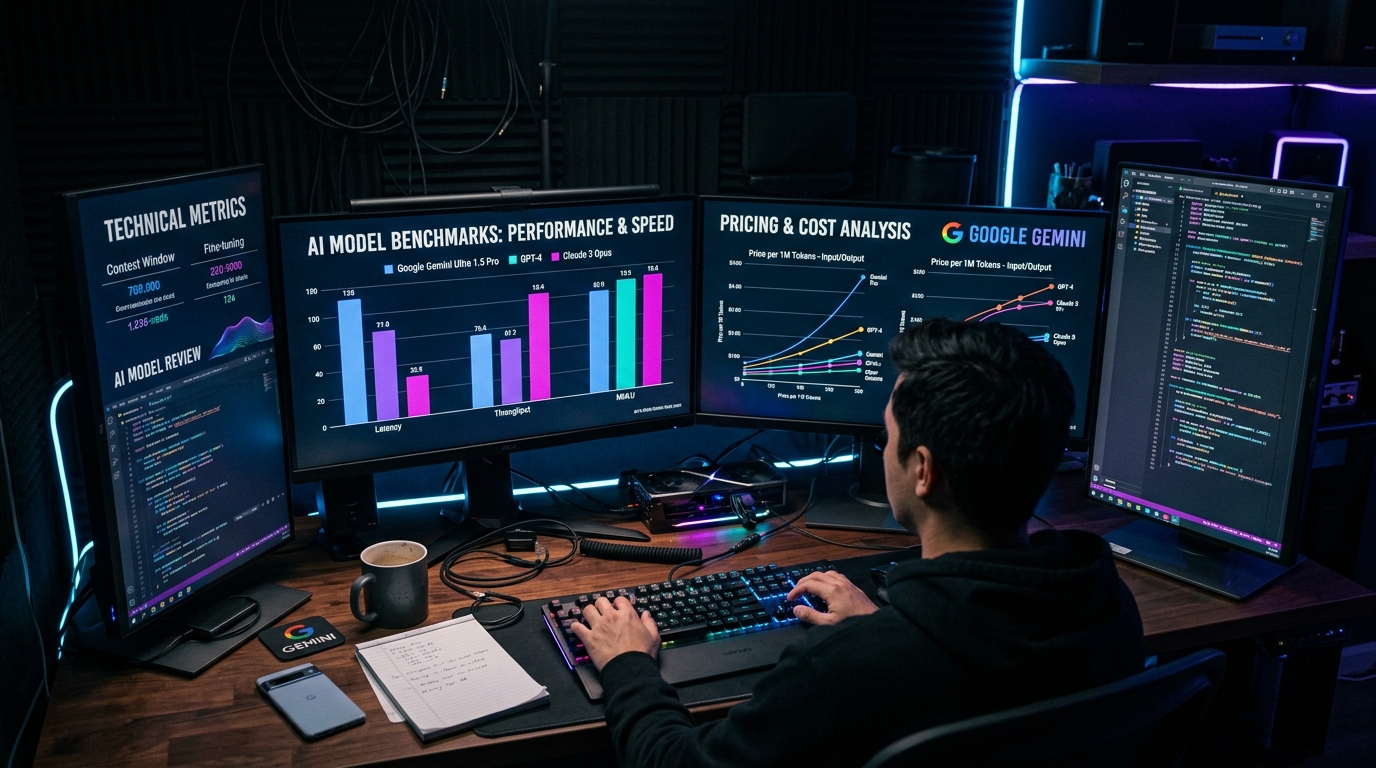
All three models sit in the fast, cheap tier, but their sticker prices differ enormously: MiMo-V2.6-Flash costs $0.14/$0.28 per million tokens direct from Xiaomi, Qwen3.8-Flash lists at $0.16/$0.47 on Alibaba’s own platforms (the Alibaba post gives 1 RMB and 3 RMB), and Gemini 3.8 Flash starts at $0.75/$3.75 — with that introductory price doubling in 2027. You can find this and other head-to-heads in our model comparisons hub.
| Row | MiMo-V2.6-Flash (Xiaomi) | Qwen3.8-Flash (Alibaba) | Gemini 3.8 Flash (Google) |
|---|---|---|---|
| Price, input per 1M tokens | $0.140 Xiaomi direct; other hosts $0.091–$0.175 | $0.16 official (1 RMB, per Alibaba); Novita host $0.15 via llm-stats | $0.75 intro; $1.50 from Jan 1, 2027 |
| Price, output per 1M tokens | $0.280 | $0.47 official (3 RMB); Novita host $0.47 | $3.75 intro; $7.50 from Jan 1, 2027 |
| Context window | 1M (Xiaomi/HF card, llm-stats); OpenRouter lists 1.1M | Native 262K, extendable to 1M | Not verified |
| License / access | MIT open weights (llm-stats); weights on Hugging Face | Open weights per Alibaba/Qwen; llm-stats says “Proprietary” — conflict flagged below | API only, plus Gemini app / AI Mode for AI Pro/Ultra subscribers |
| Release date | Sep 21, 2026 | Aug 26, 2026 | Sep 2, 2026 |
| Strongest vendor-reported evidence | DeepSWE v1.1 67.9; Terminal Bench 2.1 87.6; CyberGym 95.1 | ”Competitive with DeepSeek-V4-Flash and Claude-Opus-4.6” — no numbers published | 54.9% HLE-Verified; DeepSWE chart, no number |
| Strongest independent evidence | Intelligence Index 38 (#12 of 121); BenchLM composite 64.5 (#39 of 228) | None fetched | None fetched |
| Best-fit persona | Self-hoster / tinkerer | Solo builder wanting open weights plus a managed API | Google Workspace / consumer-app user |
| Main limit | Verbosity (240M vs 140M median output tokens); host speeds vary 7–131 tps | Latency data from one third-party host (p95 TTFT 12.13s); vendor benchmarks only | Intro price doubles Jan 1, 2027; Cyber variant restricted |
| Where to get it | Hugging Face, OpenRouter, Xiaomi direct | Hugging Face, Qwen Cloud, OpenRouter | Google AI Studio / Gemini API |
The spread is striking: Xiaomi’s model is roughly five times cheaper per input token than Google’s introductory rate. But as the rest of this post shows, sticker price is not the same as what you actually pay to get a task done.
Gemini 3.8 Flash: the safe default with an expiry date on its price
Gemini 3.8 Flash is Google’s “most intelligent workhorse model” — its third Flash release in six weeks, promising the same speed and low cost as 3.7. Its introductory price of $0.75/$3.75 per million tokens expires December 31, 2026, doubling from January 1, 2027.
Per Google’s announcement, the model claims 54.9% on HLE-Verified and — per a chart with no number in the text — outperforms most larger frontier models on DeepSWE v1.1. Google also says it beats 3.7 Flash on Vals Finance Agent V2 and Harvey’s Legal Agent Benchmark. All of these are vendor-run claims; no independent numbers were fetched for this model.
One behavioral note matters for your bill: Google says the model “works harder” — extra reasoning steps and iterative tool calls — and at higher effort levels it may use more tokens. Lower effort levels exist, and Gemini 3.7 Flash remains supported for efficiency-first workloads. In other words, the per-token price is only half the equation; how many tokens it burns per task is the other half.
Access is Gemini’s real differentiator. It is available through the Gemini API and Google AI Studio (the pricing page has a dedicated 3.8 Flash section, last updated October 22, 2026), plus Android Studio, Google Antigravity, and Gemini Enterprise. Google routes consumers through the Gemini app and AI Mode for AI Pro/Ultra subscribers. If you want to see what kinds of tools pair well with it, browse our tools directory.
Two cautions. First, the pricing: the introductory rate expires December 31, 2026, and from January 1, 2027 the price doubles to $1.50 input / $7.50 output per million tokens. Budget accordingly. Second, Google also announced Gemini 3.8 Flash Cyber, but that variant is limited to trusted defenders through the Fairwind Program and is not available to general developers. Google’s pricing page lists 3.8 Flash input and output as free of charge on the free tier, with the $0.75/$3.75 rates applying to paid use. Finally, honesty about gaps: the model’s context window and rate limits were not verified in our research — we say so rather than guess.
MiMo-V2.6-Flash: the cheapest per token — and the most talkative
MiMo-V2.6-Flash is the cheapest model here per token: $0.14 input and $0.28 output per million via Xiaomi direct, with MIT-licensed open weights, a 1M-token context window, and a September 21, 2026 release date per OpenRouter (llm-stats and BenchLM list September 22). The catch, per independent tracking, is verbosity — it writes far more output tokens than the median model to finish benchmark tasks.
The architecture explains the price. Per its OpenRouter listing, it is a Mixture-of-Experts model with 309 billion total parameters but only 15 billion activated per token, with hybrid attention and native multimodal input. That means you get big-model capacity without paying to run all of it on every request. The Flash weights are on Hugging Face, and llm-stats lists the MIT license and 1M context. Minor discrepancy worth knowing: OpenRouter lists the context as 1.1M rather than 1M.
The vendor-reported benchmarks on the Hugging Face card are strong: DeepSWE v1.1 at 67.9, Terminal Bench 2.1 at 87.6, Toolathlon-Verified at 73.6, OSWorld-Verified at 80.8, CyberGym at 95.1, ExploitGym at 6.0, and ExploitBench at 25.3. Remember: these are vendor-run numbers, not independent measurements.
The independent picture is more nuanced. Artificial Analysis gives it an Intelligence Index of 38 — rank 12 of 121 at the time of fetch — with an output speed of 59.4 tokens per second (rank 53 of 78, slower than the median of 72 cited on that page). BenchLM, with data as of October 23, 2026, scores it 64.5/100 composite, rank 39 of 228, and rank 22 in coding across 14 published benchmark rows; BenchLM did not measure speed.
Two practical warnings. First, host speed varies wildly: the OpenRouter provider table shows 37 tokens per second on Xiaomi direct, 131 on Cohere, and just 7 on DeepInfra. Your experience depends heavily on which host you pick. Second, prices differ by host too — Xiaomi direct is $0.140 input, but other OpenRouter hosts range from $0.091 to $0.175.
Qwen3.8-Flash: open weights, official pricing, and one host’s latency data
Qwen3.8-Flash pairs open weights on Hugging Face with a managed version offering 1M context by default. Alibaba’s own post gives official API pricing of 1 RMB ($0.16) input and 3 RMB ($0.47) output per million tokens on Model Studio and Qwen Cloud. Its only third-party listing we found, on Novita, reports a p95 time-to-first-token of 12.13 seconds, a real caveat for latency-sensitive work.
Start with the architecture, because it is genuinely interesting. Per the Alibaba Cloud blog, the model combines a 125B-parameter main model with 51B N-gram embeddings, activating only 6B parameters per token, with native 262K context extendable to 1M. The Qwen blog (dated August 26, 2026) describes the design as hybrid Gated DeltaNet plus Qwen Sparse Attention — GDN + QSA — and frames it as an early preview of the Qwen4 architecture.
Access comes in two flavors. The open weights live at Qwen3.8-Flash-Next on Hugging Face (also on ModelScope), and that card explains that the official managed version, Qwen3.8-Flash, is built on Flash-Next with more production features — 1M context length by default and official built-in tools. The managed version is overviewed on Qwen Cloud.
Now the caveats, and they matter. Alibaba’s vendor claim is that the model is competitive with DeepSeek-V4-Flash and Claude-Opus-4.6 across several agentic and multimodal benchmarks. The model card’s own tables give vendor-run figures, for example DeepSWE 1.1 at 58.7 and SWE-bench Pro at 62.5, but we found no independent benchmark data for this model. On pricing, Alibaba’s post gives the official rate (1 RMB and 3 RMB per million tokens, which it converts to about $0.16 and $0.47). The llm-stats tracker lists the same output price from one host, Novita, with a cached-input rate of $0.016. The same page’s trailing-seven-day latency data from Novita shows a p95 time to first token of 12.13 seconds and an output p5 of just 7 characters per second — slow at the low end.
One conflict to flag explicitly: llm-stats lists the license as “Proprietary” and parameters as 125.0B, which differs from the 125B + 51B + 6B-activated description in Alibaba’s post. The Qwen and Alibaba pages say open weights. We treat the vendor statement as primary, but if the license terms matter to you — for example, if you plan to ship a commercial product — verify the license text on the official model card before committing.
Vendor benchmarks vs independent ones — who do you believe?
Every vendor here claims strong results, but only MiMo has substantial independent tracking: an Artificial Analysis Intelligence Index of 38 (rank 12 of 121) and a BenchLM composite of 64.5. Gemini’s and Qwen’s headline claims are vendor-run, with no independent numbers fetched for either at the time of writing.
This pattern is worth internalizing, because it will save you from bad purchases. Vendor benchmarks are not lies, but they are chosen by the party selling to you: Google picks HLE-Verified and a DeepSWE chart; Xiaomi publishes its own benchmark table on its model card; Alibaba’s blog makes its comparisons in prose, while the model card carries the numbers. Independent trackers — Artificial Analysis and BenchLM — run their own evaluations, and right now they have only evaluated MiMo-V2.6-Flash among these three. That does not make MiMo the best model; it makes it the most measurable one. Gemini and Qwen might be excellent — we simply have no fetched independent data saying so.
What the “cost per finished task” math actually looks like
The cheapest per-token model is not the cheapest per finished task. MiMo costs about $0.06 per Intelligence Index task, and that figure already includes its 240 million output tokens against a 140 million median. Gemini “works harder” with more reasoning steps and tool calls, and we did not fetch its token counts.
This is the key point: Artificial Analysis reports that MiMo-V2.6-Flash costs $0.06 per Intelligence Index task — cheap — but to run the full index it generated 240 million output tokens against a median of 140 million. Per-token price and per-task cost can rank models differently, because a verbose model burns more tokens per answer. Against Gemini’s higher per-token rate, the real gap depends on how many tokens each model burns on your task, and no fetched source measured that for Gemini.
Gemini has the opposite profile: Google explicitly says the model works harder, with extra reasoning steps and iterative tool calls that consume more tokens at higher effort. So a $3.75 output rate applied to a token-hungry model can cost more per task than a $0.28 rate applied to a chatty one — or less. Without hands-on task testing, we cannot compute exact per-task costs for Gemini or Qwen; what we can say is that per-token comparisons alone will mislead you.
Qwen sits in an awkward middle: its official per-token price is low, but its only latency data comes from one host, and that host’s p95 time-to-first-token of 12.13 seconds (llm-stats) suggests you may pay in waiting time what you save in tokens.
Verdict: which should you pick?
There is no single winner here. Students and Google Workspace users should pick Gemini 3.8 Flash for its consumer app surface; solo builders get the best balance from Qwen3.8-Flash; self-hosters should take MiMo-V2.6-Flash’s MIT-licensed weights. Judge on cost per finished task, not per-token stickers.
Student (zero or low budget, wants the consumer experience): Gemini 3.8 Flash. Google’s post says it reaches consumers through the Gemini app and AI Mode for AI Pro/Ultra subscribers, plus API access via Google AI Studio. Google’s pricing page lists 3.8 Flash input and output as free of charge on the free tier, so experimenting costs nothing. Caution: the introductory price doubles on January 1, 2027, so anything you build on the cheap rate should be re-budgeted.
Solo builder (side projects, coding tools, API-first): Qwen3.8-Flash. You get open weights plus a managed version with 1M context by default and built-in tools, at official rates of about $0.16/$0.47 per million tokens. Caveats: the only latency data comes from one host (Novita via llm-stats, with that 12.13s p95 TTFT), and the license listing conflict means you should verify terms yourself. If you are choosing coding tooling around it, our AI coding agents vs traditional IDEs comparison covers how these models fit into modern workflows.
Google Workspace user: Gemini 3.8 Flash, non-negotiably. It plugs into Google’s ecosystem: AI Studio, Gemini Enterprise, the Gemini app, AI Mode, and Gemini in Google Sheets, per Google’s post.
Self-hoster: MiMo-V2.6-Flash. Its MIT license is the least ambiguous of the open-weights options (Qwen also publishes open weights, but note the llm-stats “Proprietary” disagreement), and it is the only one with substantial independent tracking. Caveats: 309 billion total parameters means serious hardware, and host speeds vary from 7 to 131 tokens per second, so test providers before committing.
The overarching rule: do not pick on per-token price. Pick on per-finished-task cost, the access surface you actually need, and whether you will ever want to self-host.
How we researched this post (and what we didn’t do)
This comparison is based on official documentation, model cards, pricing pages, and third-party trackers — we did not run these models hands-on. Specifically, we drew on Google’s announcement post and pricing docs, Xiaomi’s model card, Alibaba’s and Qwen’s blog posts, and the independent trackers Artificial Analysis, BenchLM, llm-stats, and OpenRouter, all fetched on October 24, 2026.
Where a figure is vendor-reported, we labeled it as such. Where something is unknown — Gemini 3.8 Flash’s context window and rate limits — we said “not verified” rather than guessing. Where sources disagree (Qwen’s license, MiMo’s context length), we flagged the conflict. Finally, introductory pricing is time-sensitive: Gemini’s introductory rate expires December 31, 2026, and other prices may have changed by the time you read this. Always check the vendor’s current pricing page before you commit.
📖 Related Reads
- CodeIntel Log — code quality, debugging, and software engineering benchmarks
- ToolBrain — tool reviews, LLM comparisons, and AI workflow guides
- NoCode Insider — AI workflow automation with no-code tools, agents, and APIs
Cross-links automatically generated from None.
Back to all posts