ToolBrain Daily AI Briefing — Friday August 7, 2026
What are AI agent plugins?
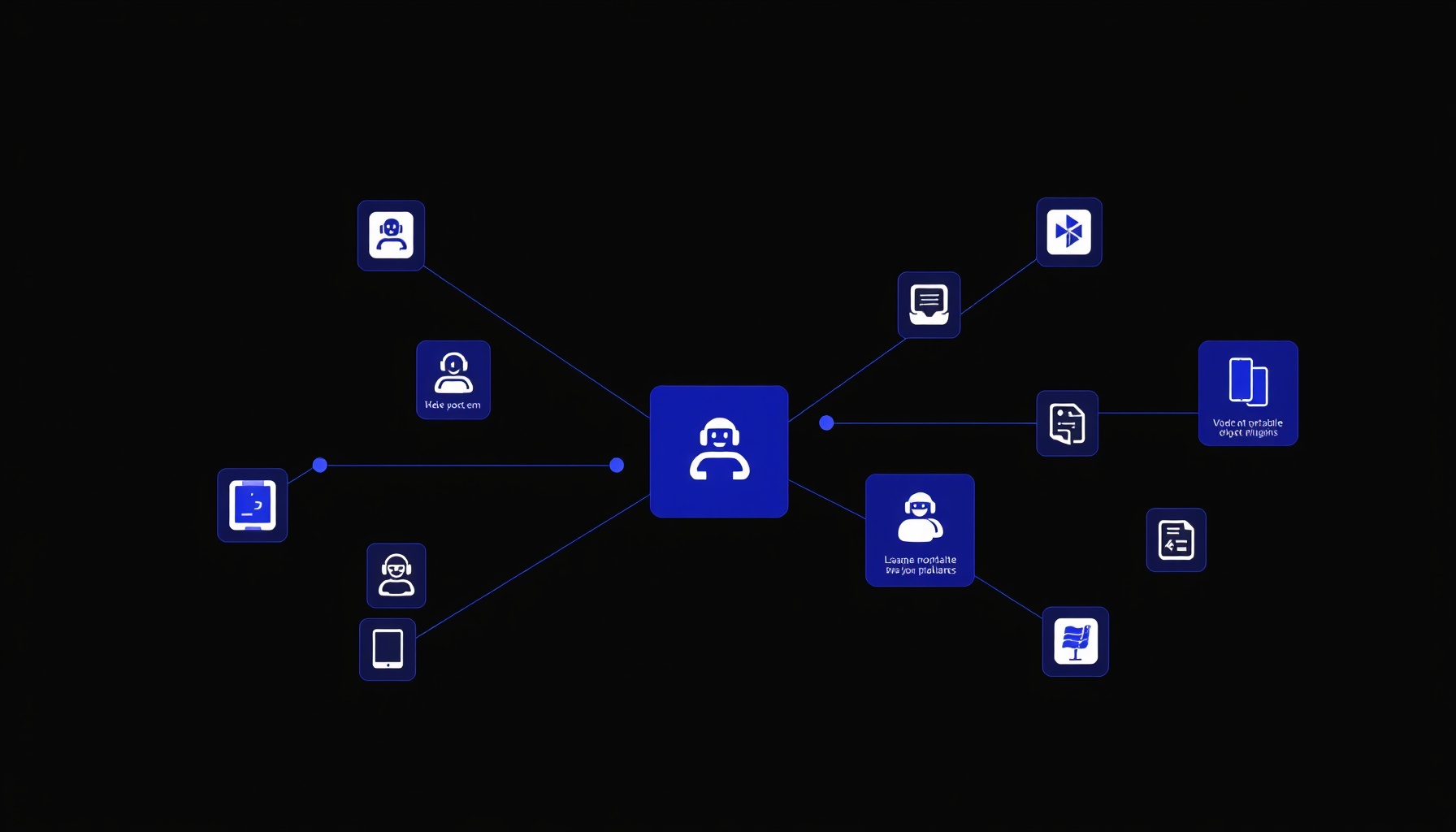
AI agent plugins are portable packages containing skills and tools that let an AI assistant perform specific tasks, like summarizing an inbox or researching a topic. Agent Plugins 1.0.0, published August 6, 2026, establishes an open, vendor-neutral standard for these packages, with Amazon, Microsoft, Cursor, and Vercel as core maintainers (https://agent-plugins.org/). This format allows a single plugin to be used across different AI clients.
Previously, each AI assistant, like ChatGPT or Copilot, often used its own proprietary format for add-ons. If you built a custom skill for one app, it wouldn’t work in another. This new standard introduces a common plugin.json manifest and a structure containing skills/ and mcp.json, creating a single package any compatible client can load (https://agent-plugins.org/). Google has also announced it will join as a core maintainer (https://aiweekly.co/ai-news-today).
For a beginner, this means a future where a helpful tool you install in one chatbot could follow you to another, reducing vendor lock-in and making the ecosystem more open.
Why are OpenAI, Google, and Microsoft agreeing on one plugin format?
They are collaborating to solve a fragmented ecosystem where each major AI client had its own plugin format, forcing developers to adapt the same package for each platform. The Agent Plugins 1.0 standard eliminates this “one format instead of five” problem by creating a shared foundation all major players can support (https://agent-plugins.org/).
This cooperation, announced by OpenAI on August 6, 2026—the eve of GPT-5’s first anniversary—signals a shift from walled gardens to interoperability (https://9to5mac.com/2026/08/06/gpt-5-turning-one-as-openai-shares-new-agent-plugins-standard/). Instead of each company reinventing the wheel, they are jointly maintaining the core specifications.
For you, this could mean more choice. A robust plugin marketplace could emerge where tools work everywhere, rather than being tied to a single provider’s store.
Does this mean plugins work in ChatGPT today?
No, this is the publication of a specification, not an immediate feature launch. Compatible clients are listed on the agent-plugins.org website, and adoption will roll out over time as these platforms integrate support. It is speculation to predict exactly when any specific client will fully implement it (https://agent-plugins.org/compatible-clients).
What this changes for a normal user is the long-term landscape. You won’t need to learn different installation methods for your favorite AI’s tools. When the standard is adopted, you could expect more reliable, third-party plugins that promise to work across the assistants you use, like ChatGPT, Claude, or Gemini.
If you’re comparing these assistants today, our Comparison Database at /comparisons/ breaks down how they score across Ease, Features, Performance, Docs, and Support. The AI Agent category in our Comparison Database tracks the tools this standard affects—see what’s being evaluated next on our roadmap. For background on agents themselves, see our AI Agents Beginner’s Guide.
Verdict: Is this worth a beginner’s attention?
Yes, but with patience. It’s a foundational shift that aims to make AI tools more portable and interoperable, which will benefit you as the ecosystem matures. You don’t need to do anything right now, but it’s a positive development to watch for simpler tool management in the future.
FAQ
Will agent plugins work with ChatGPT and Claude together?
The standard is designed for portability, meaning a plugin could theoretically work in both, provided each client implements the Agent Plugins 1.0 spec. The initiative’s goal is cross-client compatibility, but actual support depends on each company’s timeline for adoption (https://agent-plugins.org/).
Do I need to be a developer to use agent plugins?
Not necessarily. The standard aims to make plugins easier to distribute and install, which often leads to simpler interfaces for end-users. As marketplaces grow, installing a plugin could become as straightforward as adding a browser extension, though initial use may require some technical steps.
Is open-source AI still free?
Open-source AI is adopting a freemium model, remaining free for individuals and small uses while requiring revenue-sharing agreements from large commercial users. Reuters reported on August 7, 2026, that Alibaba plans to require commercial users of its next Qwen model to share revenue if their annual sales exceed a certain threshold (https://www.reuters.com/business/retail-consumer/alibaba-plans-charge-big-users-its-next-open-source-ai-model-sources-say-2026-08-07/).
This follows a precedent set by Moonshot’s Kimi K3 license, which demands up to a 30% revenue share from service providers with over $20 million in annual sales (https://www.reuters.com/business/retail-consumer/alibaba-plans-charge-big-users-its-next-open-source-ai-model-sources-say-2026-08-07/). The change targets heavy commercial use, not personal experimentation or academic research.
For a beginner, the free tier for personal use and learning remains unaffected. The key takeaway is that “open-weight” does not always mean “free for all commercial use.”
Does this change which AI tool a beginner should choose?
Not for your personal, non-commercial use. Free access to powerful models for learning, writing, and personal productivity is not changing with this announcement. The revenue-share models are aimed squarely at large businesses and developers building commercial services on top of these models.
This news primarily affects the long-term cost picture for businesses. As an individual user, you can still choose between open-weight models (like Qwen, Llama, or Mistral) and paid services (like ChatGPT Plus or Claude Pro) based on features and ease of use. The core value proposition of free open-source AI for personal use remains intact.
If you’re weighing open-weight models against ChatGPT or Claude, our Comparison Database at /comparisons/ scores them across Ease, Features, Performance, Docs, and Support.
FAQ
Do I have to pay to use Qwen or other open-source models?
For personal use, learning, and small-scale projects, no. The reported revenue-sharing plan from Alibaba and similar models from others apply to large commercial users generating significant revenue. As a beginner, you can continue to use these models freely.
What about using open-source AI at my job?
If your company plans to build a product or service generating significant revenue (e.g., over $20 million annually) using a specific open-source model, you should investigate the model’s license. Newer licenses may include commercial terms. For internal tools or low-volume use, the free tiers typically apply.
Is this the end of free open-source AI?
No. This establishes a commercial tier for heavy users while preserving free access for the vast majority of individuals and small businesses. It’s a sustainable model to fund development while keeping AI accessible for learning and innovation.
This story was produced by our automated pipeline—track what’s coming next at /cron-pipeline/.
Back to all posts