Choosing an AI model can feel like guessing. This week, Anthropic released two pieces of research that help. One introduces a new score for “conceptual reasoning”—the kind of thinking needed for complex problems without a single right answer. The other shows an unreleased Claude model making a real discovery in mathematics. Both give beginners new clues about which AI tool might be best for hard thinking tasks. This briefing is based on official announcements, vendor documentation, and news reports — we did not test these tools hands-on.
What Is the Conceptual Reasoning Index?
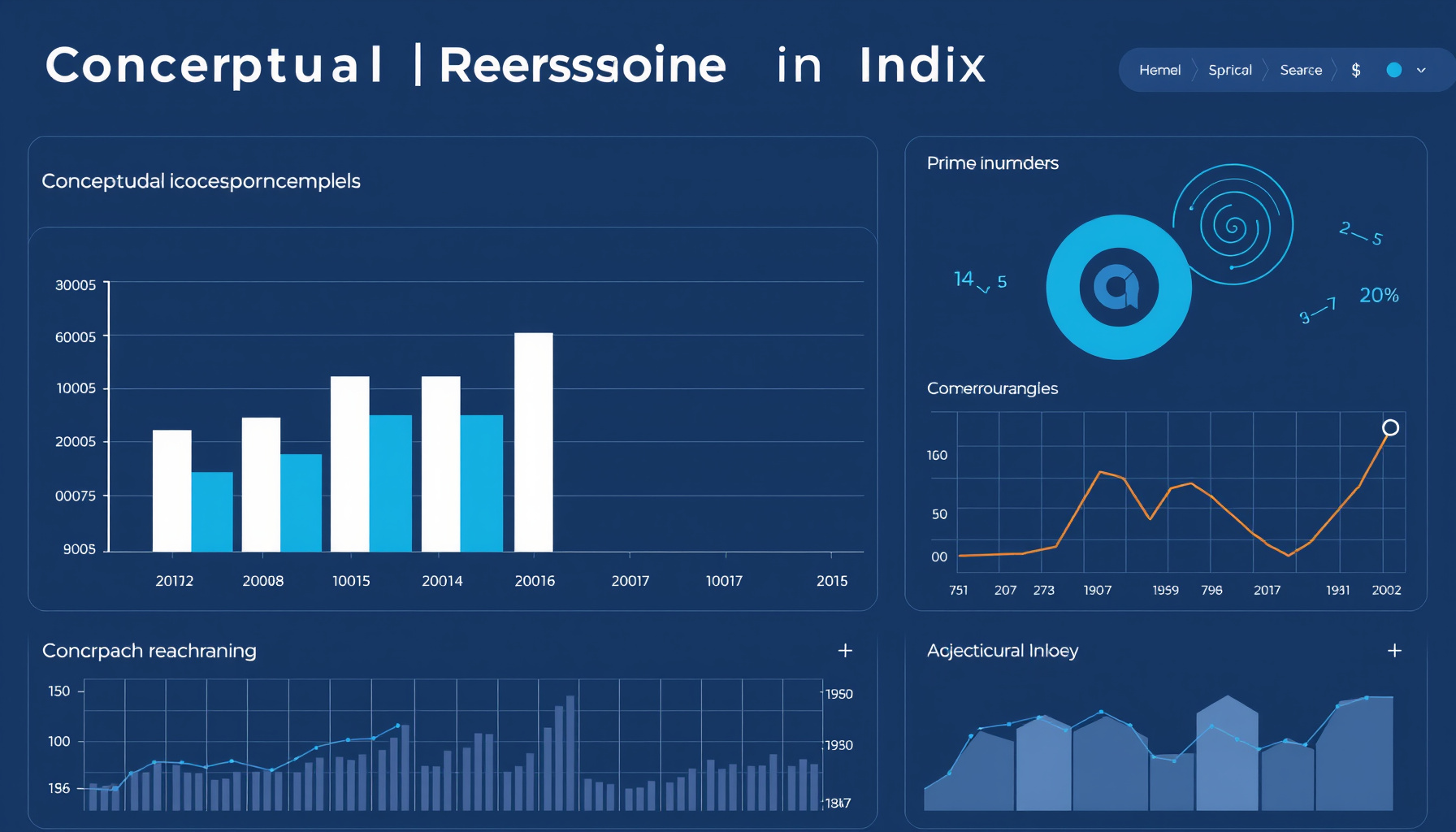
The Conceptual Reasoning Index (CRI) is a new benchmark, released August 12, 2026 by Anthropic with Redwood Research, that scores AI models on conceptual reasoning — argumentation, logical consistency, and decision theory — on a 0-100 scale Anthropic’s alignment blog. It aggregates three sub-benchmarks: LMCA (argument quality), ACCoRD (logical consistency), and DTBench (decision theory), weighted 60/20/20 Anthropic’s alignment blog. Think of it less like a math test and more like a philosophy exam: it measures how well a model builds arguments, stays logically consistent, and makes choices based on principles, not just data Anthropic’s alignment blog.
Why Do Reasoning Benchmarks Matter for Choosing a Model?
Because most public benchmarks measure coding and math, while CRI measures judgment on questions without a single right answer — the kind of reasoning AI safety and governance work needs Anthropic’s alignment blog. For a beginner, it’s a new lens on “which AI model is best at reasoning”: Anthropic’s Opus 5 scores highest at 73.6, but the estimated ceiling is ~91, so no model is close to saturating it Anthropic’s alignment blog. This matters because it suggests current models, even top ones, still have significant room to improve in the subtle, human-like reasoning used in law, ethics, and complex decision-making.
Verdict: Which AI Model Is Best at Reasoning?
The honest answer for beginners — the CRI is one new signal, not the final word. Opus 5 leads the index at 73.6 (of a ~91 ceiling) while Claude Fable 5 got 98% of the decision-theory questions right, and scores across labs have been rising steadily since late 2024 with no signs of flattening Anthropic’s alignment blog. Use it alongside the Comparison Database, not instead of it. If you’re choosing between Claude, GPT, Gemini, and DeepSeek, our Comparison Database at /comparisons/ breaks down how they score across Ease, Features, Performance, Docs, and Support. The CRI adds a “reasoning” dimension to that picture. We track the LLM category in our Comparison Database — it’s at 7 of 10 tools. See the full roadmap.
FAQ
What is a benchmark and why should I care?
A benchmark is a standardized test for AI models, like a final exam for a class. It matters because it gives you an objective way to compare different tools on specific skills. The CRI is a new test focused on complex reasoning, helping you see which model might be better for tasks like analyzing arguments or understanding ethical dilemmas Anthropic’s alignment blog.
Should I switch tools based on benchmark scores?
Not necessarily. Benchmarks are one data point, not a complete picture. They don’t measure ease of use, cost, or how well a tool fits your specific workflow. A model with a top reasoning score might still be overkill for writing an email. Use benchmark scores like the CRI as a tiebreaker when you’ve already narrowed your choices based on practical needs.
Which AI model is best at reasoning?
According to this new index, Anthropic’s Opus 5 currently scores highest with a 73.6 Anthropic’s alignment blog. However, this is just for “conceptual reasoning.” The best model for you depends on what you need it for. For a hands-on look at how models like Claude Fable 5 perform, you can read our Claude Fable 5 review.
Can AI Solve the Riemann Hypothesis?
No — not yet. But on August 10, 2026 Anthropic reported that an unreleased research version of Claude improved a longstanding mathematical result related to the Riemann hypothesis: the proven fraction of zeta-function zeros that satisfy the hypothesis went from 41.6% to 67.2%, with a formally verifiable proof that two Anthropic mathematicians and external experts Brian Conrey and Dan Goldston examined Anthropic’s research page. In plain terms, the Riemann zeta function is a core object in number theory, and the hypothesis is a 160-year-old conjecture about its behavior. Proving it would be a monumental event in mathematics.
How Did Claude Do It?
Claude worked in two sessions in Claude Code, generating roughly 31 million output tokens and coordinating about 60 subagents — two developed the key ideas, thirteen contributed, thirty tried and failed, thirteen validated, and two wrote the paper Anthropic’s research page. Anthropic stresses the result draws on decades of human mathematics and that the techniques likely won’t produce a full proof of the 160-year-old problem Anthropic’s research page. This highlights a new collaborative model: AI as a research partner that can handle massive computational exploration and organize work across many specialized agents.
Verdict: Does the Math Breakthrough Matter for Beginners?
Yes, as a signal — frontier models can now assist original mathematics research, which hints at where reasoning quality is heading Anthropic’s research page. But the model involved is a research prototype, not a product you can subscribe to today; for everyday help, today’s Claude, GPT, and Gemini models remain the practical choice. This breakthrough is about pushing boundaries, not about what’s in your chat window tomorrow. If you’re comparing Claude, GPT, and Gemini for reasoning-heavy work, our Comparison Database at /comparisons/ scores them across Ease, Features, Performance, Docs, and Support.
FAQ
Can AI solve the Riemann hypothesis?
Not at this stage. The recent result improved a related, lower-bound result about the hypothesis, which is a step forward. However, Anthropic explicitly states they do not expect Claude’s techniques to lead to a full proof of the Riemann hypothesis itself, which remains one of the most famous unsolved problems in mathematics Anthropic’s research page.
Should I expect my AI chatbot to do math research?
Not in the near future. The Claude model that made this discovery is a specialized, unreleased research prototype. Current commercial chatbots like Claude, GPT, or Gemini are excellent for explaining math concepts, helping with homework, or solving textbook problems, but they are not yet equipped to conduct original mathematical research on this level. For help with everyday math, check out our beginner’s guide to Claude Code.
This story was produced by our automated pipeline — track what’s coming next at /cron-pipeline/. See what’s being evaluated next in our comparison database on the roadmap at /roadmap/.
For you, the beginner, this week’s news means the landscape of “smart” AI is getting a new metric. When you ask which tool to use, you can now look for one that not only knows facts but can also build a logical argument. That’s a step toward AI that thinks, not just retrieves.
Back to all posts