📖 What Is AutoGPT?
AutoGPT is an open-source autonomous AI agent framework released in March 2023 by Significant Gravitas. It was the first project to demonstrate GPT-4 operating autonomously — setting its own goals, breaking them into sub-tasks, using tools, and iterating without human intervention at every step. The original demo went viral, accumulating 100K+ GitHub stars in its first month.
For context on where AutoGPT sits in the wider landscape, our comparison database benchmarks it side by side with every major AI Agent tool.
In 2026, AutoGPT exists as two separate codebases under one repo: classic/ — the original proof-of-concept, now marked as experimental/unsupported with known vulnerabilities — and autogpt_platform/ — a from-scratch production rebuild using FastAPI (Python backend), Next.js (TypeScript frontend), and Docker Compose for deployment. The platform version focuses on reliable agent execution with a proper permission system, multi-provider LLM support (OpenAI, Anthropic, Groq, LiteLLM), and a visual block-based agent builder.
📊 At a Glance & ✅ Pros & Cons
| Specification | AutoGPT (Classic) | AutoGPT (Platform) | LangGraph | CrewAI |
|---|---|---|---|---|
| Category | Autonomous Agent (CLI) | Agent Platform (Web UI + API) | Agent Orchestration Framework | Multi-Agent Framework |
| Pricing | Free (self-hosted) | Free (self-hosted) | Free (open-source) + LangSmith paid | Free (open-source) + CrewAI Enterprise |
| License | MIT (implied) | MIT (implied) | MIT | MIT |
| Language | Python | Python + TypeScript | Python + TypeScript | Python |
| LLM Support | OpenAI primarily | Multi-provider (OpenAI, Anthropic, Groq, LiteLLM) | Any LangChain-compatible | Any LLM provider |
| Permission System | 3-tier deny-by-default | 3-tier deny-by-default | None built-in | None built-in |
| GitHub Stars | 184K★ (combined) | 45K★ | 35K★ | |
| Production Ready | ❌ No (unsupported) | ⚠️ Maturing | ✅ Yes | ✅ Yes |
✅ What It Does Best
- Best permission system in open-source agents — 3-tier deny-by-default with glob-patterned allow/deny rules. No other framework comes close on security
- Sandboxed workspaces — Every agent operates in its own directory with file access restrictions. Sensible defaults deny reading .env, .key, .pem files
- Platform rebuild is well-architected — FastAPI backend, proper component separation, multi-provider LLM support. Cleaner than most agent frameworks
- 184K★ community — Massive user base, active discussions, extensive issue tracker. Help is easy to find
- Free and self-hosted — No per-seat pricing, no API middleman. Your API keys, your infrastructure
❌ Where It Falls Short
- Dual codebases create confusion — classic/ is stale and vulnerable, platform/ is still maturing. New users don't know which to use
- Classic codebase has known vulnerabilities — Marked as unsupported with no fix timeline. Anyone still using classic/ is exposed
- Platform is behind competitors on features — No native multi-agent orchestration (CrewAI has this), no graph-based workflows (LangGraph)
- Documentation is fragmented — Two sets of docs for two codebases, plus the platform docs are still filling in
- Setup complexity — Docker Compose, PostgreSQL, Redis, multiple services. Heavier than pip-install competitors
Best multi-agent orchestration with graph-based DAG workflows and LangChain's 600+ integrations
CrewAIPurpose-built multi-agent teams with role-based delegation, easier setup, and enterprise tier
OpenAI Agents SDKFirst-party agent framework with deep GPT integration, managed infrastructure, and largest developer ecosystem
✨ Capabilities & Agentic Deep Dive
Autonomous Task Execution
AutoGPT Platform can autonomously break down user goals into sub-tasks, execute them sequentially using a chain-of-thought loop, and iterate based on results. Each task step includes thinking, tool selection, tool execution, and result evaluation. The agent uses GPT-4 (or any configured LLM) for reasoning and maintains context across the full task lifecycle. Task execution is persistent — the agent can pause, resume, and handle long-running operations without losing state.
3-Tier Permission System
The permission system operates at three levels: Agent (global capabilities), Workspace (file access boundaries), and Session (runtime permissions). Each level uses deny-by-default with explicit allow lists using glob patterns — for example read_file({workspace}/**) or execute_shell(git:*). This granularity is unmatched in any other open-source agent framework and makes AutoGPT the safest choice for production deployments where agent actions need strict guardrails.
Multi-Provider LLM Support
Unlike its classic predecessor (OpenAI-only), the platform supports OpenAI, Anthropic Claude, Groq, and any LiteLLM-compatible provider. The provider configuration is done via environment variables, making it easy to switch models without code changes. This flexibility is especially valuable for teams that need to use different models for different task types — cheap models for simple operations, expensive models for complex reasoning.
Visual Block Builder
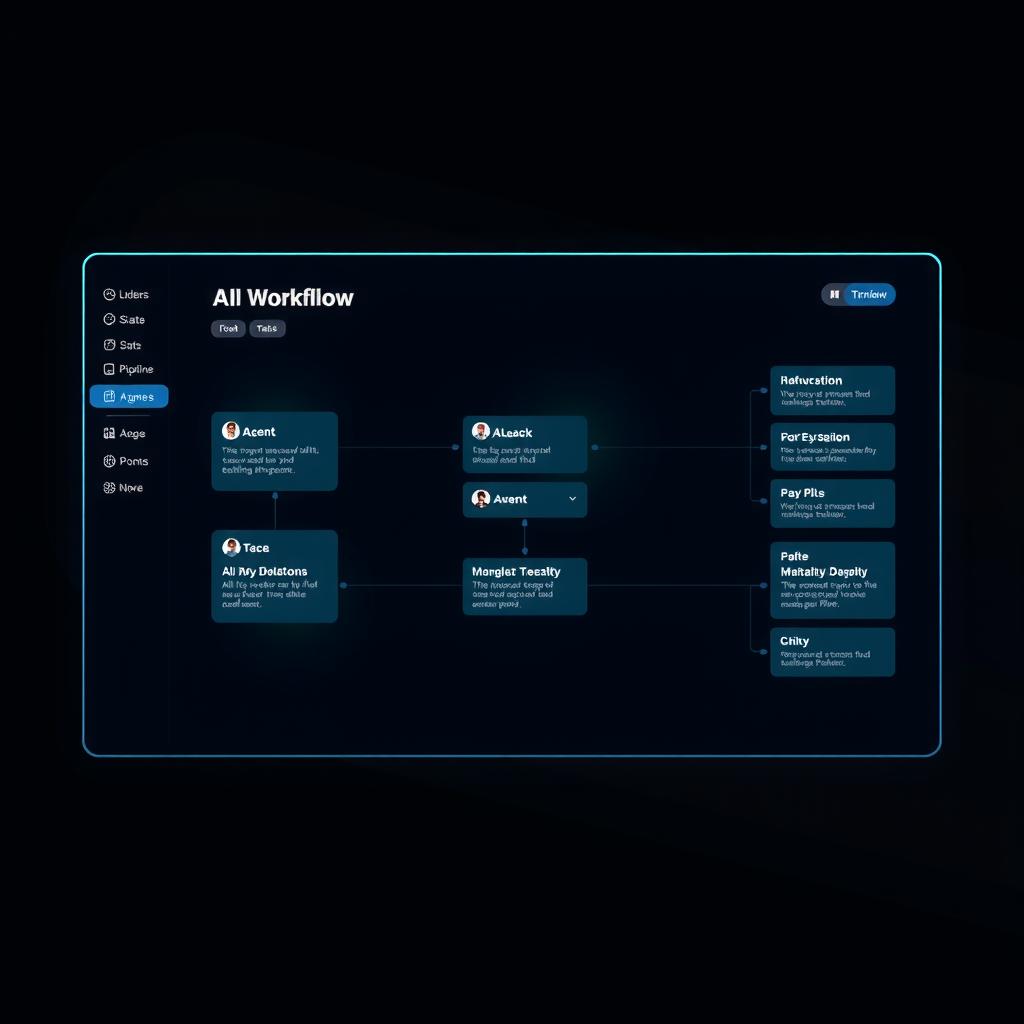
The platform includes a drag-and-drop block-based agent builder in the Next.js frontend. Users can compose agents by connecting pre-built blocks (input, LLM call, tool execution, file write, etc.) in a visual pipeline. While the block library is still small compared to n8n (400+ nodes) or LangChain (600+ integrations), it provides an accessible entry point for users who prefer visual programming over code-based agent definition.
🔬 AI Performance Analysis
🦾 Ease of Use
AutoGPT's dual-codebase structure creates significant setup friction. New users land on the GitHub repo and face a choice: the outdated classic/ that needs Poetry but works immediately, or the modern platform/ that requires Docker Compose, PostgreSQL, Redis, and a frontend build step. Documentation is split across both versions. Once past setup, the platform's REST API is clean (FastAPI auto-docs), but there are no SDK/client libraries — competitors like LangGraph offer Python and JS SDKs with first-class docs.
⚙️ Features
Strong capabilities across autonomous task decomposition, tool use, web browsing, file I/O, and code execution. The forge component architecture is well-designed with clean separation of agent protocols, config management, and file storage. Multi-provider LLM support (OpenAI, Anthropic, Groq, LiteLLM) is first-rate. However, it lacks native multi-agent orchestration and graph-based DAG workflows that competitors like CrewAI and LangGraph offer.
🚀 Performance
AutoGPT's weakest area. The classic codebase is marked as unsupported with known vulnerabilities. The platform rebuild is maturing but behind on execution speed, reliability under load, and task completion rates. Docker-based deployment adds latency vs. pip-install competitors. Lacks caching and parallelization that CrewAI and LangGraph have built.
📚 Documentation
Improved but fragmented — two sets of docs for two codebases, and the platform docs are still filling in. Classic docs are more comprehensive but irrelevant for new users. Platform docs cover API endpoints and setup but lack advanced guides and best practices. Community docs on GitHub wiki fill some gaps.
🎯 Support
The 184K★ GitHub community is massive — issues get responses within hours. But there's no formal support team, SLA, or enterprise tier (unlike LangSmith or CrewAI Enterprise). Plugin ecosystem is underdeveloped vs. LangChain (600+ integrations) or n8n (400+ nodes). MCP protocol support was announced but hasn't shipped.
🎯 Ideal Use Cases
✅ Best For
|
❌ Not Ideal For
|
AutoGPT is free and open-source — no per-seat pricing, no platform fees. You only pay for your LLM API usage (OpenAI, Anthropic, Groq, or any LiteLLM provider).
Quick start: Clone the repo → docker compose up → set your OPENAI_API_KEY → open localhost:3000. You'll need Docker, 2GB RAM, and an API key from your LLM provider. The platform version (recommended) runs on any VPS or local machine.
| ❓ FAQ | |
|---|---|
| Is AutoGPT still maintained in 2026? | Yes, but primarily the autogpt_platform/ codebase. The classic/ codebase is marked as experimental and unsupported — it has known vulnerabilities and won't receive updates. New users should use the platform version exclusively. |
| How does AutoGPT compare to LangGraph in 2026? | LangGraph offers better multi-agent orchestration, a richer tool ecosystem (LangChain integrations), and a managed cloud offering (LangSmith). AutoGPT wins on security (permission system) and cost (free self-hosted). For production deployments, LangGraph is the safer choice today. |
| Can I use AutoGPT with Claude instead of GPT? | Yes, the platform version supports multiple LLM providers including Anthropic Claude, OpenAI GPT, Groq, and any LiteLLM-compatible provider. You configure the provider via environment variables. |
| What infrastructure do I need to run AutoGPT Platform? | Docker Compose with PostgreSQL and Redis. A VPS with 2GB RAM is sufficient for small deployments. The classic version only needs Python + Poetry. See the project README for Docker Compose setup. |
| 📖 Related Reads | |
|---|---|
| LangGraph vs CrewAI vs OpenAI Agents SDK 2026 | Head-to-head comparison of the three leading agent orchestration frameworks |
| Best Open-Source AI Agent Frameworks 2026 | Comprehensive guide to open-source agent platforms for production |
| How to Secure AI Agents in Production | Security best practices for deploying autonomous agents safely |
| 📚 Verification & Citations | |
|---|---|
| AutoGPT GitHub Repository | 184K★, 46K forks — primary source for architecture and features |
| AutoGPT Documentation | Official platform and classic docs |
| LangGraph GitHub | 45K★ — primary competitor comparison |
| CrewAI GitHub | 35K★ — multi-agent competitor comparison |
| OpenAI Agents SDK | Official OpenAI agent framework (repo moved to openai-agents-python), competitor reference |
- May 2026: Initial review published. Covers autogpt_platform v0.x and classic/ as two separate codebases. Platform rebuild still in active development.
Dig deeper: Claude Cowork review · LangGraph review.
Is AutoGPT still maintained in 2026?
Yes, but primarily the autogpt_platform/ codebase. The classic/ codebase is marked as experimental and unsupported — it has known vulnerabilities and won't receive updates. New users should use the platform version exclusively.
How does AutoGPT compare to LangGraph in 2026?
LangGraph offers better multi-agent orchestration, a richer tool ecosystem (LangChain integrations), and a managed cloud offering (LangSmith). AutoGPT wins on security (permission system) and cost (free self-hosted). For production deployments, LangGraph is the safer choice today.
Can I use AutoGPT with Claude instead of GPT?
Yes, the platform version supports multiple LLM providers including Anthropic Claude, OpenAI GPT, Groq, and any LiteLLM-compatible provider. You configure the provider via environment variables.
What infrastructure do I need to run AutoGPT Platform?
Docker Compose with PostgreSQL and Redis. A VPS with 2GB RAM is sufficient for small deployments. The classic version only needs Python + Poetry.