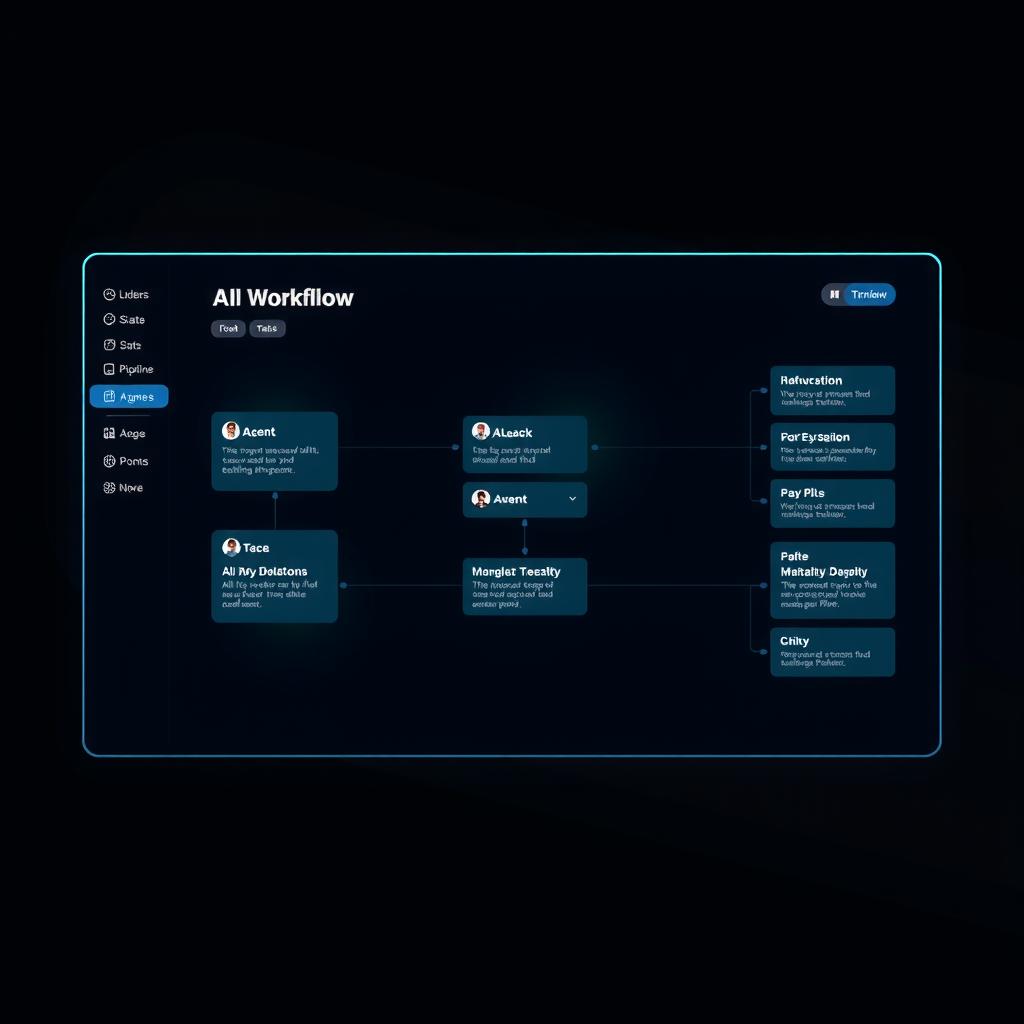
📖 What Is Symphony?
Symphony is an open-source specification and reference implementation for orchestrating autonomous coding agents at scale. Instead of an engineer managing multiple Codex sessions across terminals — context-switching between agents, nudging them back on track, debugging stalled tasks — Symphony treats your issue tracker as a control plane. Every open ticket gets a dedicated agent workspace. Agents pull work, implement it, provide proof of completion, and land PRs. Humans review results instead of supervising processes.
For context on where Symphony sits in the wider landscape, our comparison database benchmarks it side by side with every major AI Agent tool.
OpenAI released Symphony under the Apache 2.0 license on April 27, 2026. The repo quickly gathered over 23,500 stars, trending on GitHub in large part because of the tech stack choice: it is written in Elixir (22.6K lines, 95.5% of the codebase). This was OpenAI's first major open-source Elixir project.
📊 At a Glance & ✅ Pros & Cons
| Specification | Symphony | Claude Code | Codex CLI |
|---|---|---|---|
| Category | Agent Orchestrator | Interactive Coding Agent | Coding Agent CLI |
| Pricing | Free (Apache 2.0) + API costs | $20–$200/month | Free (MIT) + API costs |
| License | Apache 2.0 | Proprietary | MIT |
| Orchestration Model | Ticket-driven, autonomous | Interactive session | Interactive session |
| Human Role | Review results | Supervise + steer | Supervise + steer |
| Proof of Work | ✅ Required (CI, video, tests) | ❌ Optional | ❌ Not enforced |
| Parallelism | Native (BEAM processes) | Manual multi-session | Manual multi-session |
| Tech Stack | Elixir/Erlang | TypeScript/Python | TypeScript |
| GitHub Stars | 23,500+ | 127K | 180K |
| Key Differentiator | Autonomous PR lifecycle from issue tracker | Best raw coding capability | Multi-model with 75+ providers |
✅ What It Does Best
- Genuinely new approach. Ticket-driven orchestration solves the context-switching bottleneck that limits agent adoption at scale.
- Proven results. Internal OpenAI teams saw 500% increase in landed PRs within three weeks of adoption.
- BEAM-powered reliability. Elixir's lightweight process isolation, supervision trees, and hot code reloading are a natural fit for agent supervision.
- Proof-of-work enforcement. Agents must provide CI passes, test evidence, and walkthroughs before merging — raising code quality standards.
- Apache 2.0 + SPEC.md. Fully open source with a language-agnostic spec that invites reimplementation in any stack.
❌ Where It Falls Short
- High infrastructure prerequisites. Requires mature CI/CD, comprehensive test suites, and clear agent policies to function effectively.
- Not for individuals. Designed for engineering organizations, not solo developers or small teams. Interactive tools like Claude Code are more immediately useful.
- Engineering preview maturity. Released April 27, 2026 — limited production track record, documentation still evolving.
- Elixir dependency for reference impl. The reference implementation requires Elixir, which may be unfamiliar to most engineering teams.
- Linear-only primary integration. While SPEC.md supports others, Jira and GitHub Issues support is less mature.
Best for individual developers who want interactive coding assistance with 1M-token context and Agent Teams
Codex CLIOpenAI's open-source coding agent with multi-model support and 75+ provider options. Better for individual use
OpenClawPersonal AI assistant with 375K★ community and broadest platform coverage. Better for personal automation
✨ Capabilities & Agentic Deep Dive
Issue Tracker as Control Plane
Symphony continuously polls your issue tracker (Linear is the primary integration; SPEC.md supports others). New tickets automatically get agent workspaces. Ticket status transitions drive the agent lifecycle — backlog, in progress, review, merging, done. This is a significant departure from interactive coding agents: instead of an engineer managing sessions, the issue tracker becomes the source of truth for what agents should be working on.
Proof of Work Enforcement
Agents don't just write code and push. Symphony requires verifiable proof before merging: successful CI passes, pull request with description and test evidence, walkthrough video of the feature working, and complexity analysis with review feedback addressed. Agents own the full lifecycle — implement, test, document, review, merge. This is a significant step beyond current coding agents that simply generate code and stop.
Why Elixir? BEAM-Powered Reliability
The choice of Elixir — built on the Erlang BEAM VM — is not accidental. Each agent runs in its own BEAM process with full isolation. If one agent crashes, it does not affect others. OTP supervisors restart failed agents automatically. Hot code reloading enables updates without stopping running agents. The BEAM's let it crash philosophy maps naturally to agent orchestration, where individual agent failures should never bring down the system. The reference implementation is in Elixir, but the SPEC.md is language-agnostic — OpenAI explicitly invites reimplementations in other languages.
🔬 AI Performance Analysis
🦾 Ease of Use
Symphony has the highest setup bar of any tool in this review category. It requires a mature engineering organization with established CI/CD pipelines, comprehensive automated test suites, and clear agent policies in a WORKFLOW.md file. The Linear API key and Codex credential configuration via dev.exs is straightforward for teams already using these tools, but the harness engineering prerequisites are real. For organizations without these foundations, Symphony won't function as intended.
⚙️ Features
Ticket-driven orchestration, proof-of-work enforcement (CI, tests, walkthroughs, review), modular composable workflows (architecture analysis, planning, investigation, implementation), continuous 24/7 operation via BEAM devbox, native parallel agent execution, and autonomous PR lifecycle from issue to merge. The SPEC.md-first approach ensures the architecture is well-documented and language-agnostic. The modular workflow system provides composability most agent frameworks lack.
🚀 Performance
The BEAM VM's process model provides native parallelism and fault tolerance that few agent frameworks can match. Each agent is fully isolated — a crash in one never affects others. Supervision trees provide automatic recovery. Hot code reloading enables updates without stopping running agents. Continuous operation on a devbox means Symphony works 24/7. OpenAI engineers report agents completing work from tickets filed via mobile Linear apps before they return to their desks.
📚 Documentation
The SPEC.md is the standout asset — a well-written, language-agnostic specification that serves as both documentation and invitation for reimplementation. However, as an engineering preview released in late April 2026, the broader ecosystem is nascent. Few third-party tutorials, integrations, or community tools exist. The Elixir reference implementation is well-structured but assumes familiarity with Phoenix framework and OTP patterns.
🎯 Support
The GitHub community is active (23,500+ stars), and the rapid adoption suggests strong interest. Contribution patterns and governance are still forming. The primary integration is Linear-focused, with Jira and GitHub Issues support defined in the spec but less mature in practice. The Apache 2.0 licensing and open development model invite community contributions, but the ecosystem is at an early stage.
🎯 Ideal Use Cases
✅ Best For
|
❌ Not Ideal For
|
Symphony is free under the Apache 2.0 license — no usage caps, no licensing fees. You pay only for agent API calls (Codex, Claude) and hosting infrastructure. Requires an existing Linear or Jira setup.
Quick start: Clone the repo → mix deps.get → configure your Linear API key and Codex credentials in config/dev.exs → run mix phx.server. Alternatively, implement the SPEC.md in any language. You'll need Elixir installed for the reference implementation, or any stack for a custom build. Works best with mature CI/CD and a WORKFLOW.md agent policy file.
| Overall Score | 7.5/10 |
|---|
| ❓ FAQ | |
|---|---|
| Is Symphony a personal coding assistant like Claude Code? | No. Symphony is an organizational orchestrator that manages autonomous coding agents through your issue tracker. It's designed for teams running dozens of parallel agent sessions. For individual developers, interactive tools like Claude Code or Codex CLI are more immediately useful. |
| Do I need to know Elixir to use Symphony? | Not necessarily. The SPEC.md is language-agnostic and OpenAI explicitly invites reimplementations in other languages. However, the reference implementation is in Elixir, so running it as-is requires Elixir/Phoenix familiarity. |
| What issue trackers does Symphony support? | Linear is the primary integration with the most mature support. The SPEC.md defines support for Jira and GitHub Issues, but these are less battle-tested in practice. |
| Does Symphony require a specific CI/CD setup? | Yes. Symphony works best in codebases with mature CI/CD pipelines, comprehensive test suites, and clear agent policies defined in a WORKFLOW.md file. The proof-of-work system depends on these being in place. |
| Is Symphony free and open source? | Yes. Licensed under Apache 2.0, fully open source, with no usage caps or licensing fees. You only pay for the underlying agent API calls and hosting infrastructure. |
| 📖 Related Reads | |
|---|---|
| Codex CLI Review 2026 | OpenAI's open-source terminal-native coding agent with multi-model support and 75+ provider options. |
| Claude Code Review 2026 | 8.2/10 | Anthropic's terminal-native autonomous coding agent with 1M-token context and Agent Teams. |
| Hermes Agent Review 2026 | 8.2/10 | Nous Research's self-improving open-source AI agent with a built-in learning loop and skill creation. |
| 📚 Verification & Citations | |
|---|---|
| Symphony GitHub Repository | 23,500+ stars, Apache 2.0 — primary source for architecture and features. Accessed May 2026. |
| Symphony SPEC.md | Language-agnostic specification for the agent orchestration protocol. Accessed May 2026. |
| Erlang/OTP Documentation | BEAM VM and OTP supervision tree documentation. Accessed May 2026. |
| Phoenix Framework Docs | Elixir web framework used by Symphony's reference implementation. Accessed May 2026. |
OpenAI announced that GPT-4.5 will be retired from ChatGPT on June 27, 2026, followed by o3 retirement on August 26. The retirements signal next-generation models (possibly GPT-5 or o4) are approaching release, with implications for Symphony's underlying model ecosystem.
OpenAI filed its S-1 IPO targeting September 2026 at up to $1 trillion valuation. Symphony, as the open-source ticket-driven orchestrator, is positioned as a key part of OpenAI's enterprise strategy — bringing autonomous agent orchestration to engineering organizations alongside Codex and ChatGPT Enterprise.
OpenAI's cybersecurity model GPT-5.5-Cyber is now available to vetted EU teams, businesses, and governments, integrating with the EU AI Office. This positions OpenAI against Anthropic's Claude Mythos for government and critical infrastructure contracts.
- May 29, 2026: Full v4 canonical restructuring — added comparison table, performance analysis, verdict banner, and Get Started card. Score breakdown integrated into verdict.
- May 12, 2026: Initial review published. Covering Symphony as an autonomous agent orchestrator from OpenAI.
Dig deeper: OpenClaw review · Hermes Agent review.
Is Symphony a personal coding assistant like Claude Code?
No. Symphony is an organizational orchestrator that manages autonomous coding agents through your issue tracker. It's designed for teams running dozens of parallel agent sessions.
Do I need to know Elixir to use Symphony?
Not necessarily. The SPEC.md is language-agnostic and OpenAI explicitly invites reimplementations. However, the reference implementation is in Elixir, so running it as-is requires Elixir/Phoenix familiarity.
What issue trackers does Symphony support?
Linear is the primary integration with the most mature support. The SPEC.md defines support for Jira and GitHub Issues, but these are less battle-tested in practice.
Does Symphony require a specific CI/CD setup?
Yes. Symphony works best with mature CI/CD pipelines, comprehensive test suites, and clear agent policies in a WORKFLOW.md file. The proof-of-work system depends on these being in place.
Is Symphony free and open source?
Yes. Licensed under Apache 2.0, fully open source, with no usage caps or licensing fees. You only pay for the underlying agent API calls and hosting infrastructure.