Guide: DePIN and AI Agents — Decentralized Physical Infrastructure Networks in 2026

The Bottom Line
DePIN (Decentralized Physical Infrastructure Networks) is the fastest-growing sector in crypto, hitting $18.9B market cap by May 2026 with ~$150M monthly on-chain revenue. The AI compute crunch — OpenAI alone burns $700K+/day on compute — is the primary demand driver. Projects like Akash (85% cheaper than AWS), Render ($38M/mo revenue), and Bittensor ($3.12B market cap) are turning idle hardware into verifiable, token-incentivized infrastructure networks. AI agents are the next wave: self-managing wallets on DePIN networks, autonomously buying compute, storing data, and executing inference. If you're looking for the intersection of real revenue, crypto incentives, and AI infrastructure — this is where it lives in 2026.
What Is DePIN?
DePIN stands for Decentralized Physical Infrastructure Networks. Instead of a single company (AWS, Google Cloud, AT&T) building and owning infrastructure, DePIN protocols use token incentives to crowdsource hardware from anyone. Contribute a GPU, a wireless hotspot, a hard drive, or a dashcam — earn tokens. Smart contracts coordinate supply and demand on-chain.
The sector splits into two structural families:
- Physical Resource Networks (PRN): Location-dependent hardware — wireless hotspots (Helium), dashcams for mapping (Hivemapper), vehicle telemetry (DIMO). High upfront friction, defensible once density is achieved.
- Digital Resource Networks (DRN): Location-independent, fungible resources — GPU compute (Render, Akash), storage (Filecoin), bandwidth (Theta). Supply can scale instantly; more susceptible to commoditization pressure.
The flywheel is self-reinforcing: hardware providers earn tokens → network capacity grows → costs drop → real customers arrive → on-chain revenue rises → token appreciation attracts more providers.
The AI Compute Crisis That Made DePIN
The AI industry faces a structural compute bottleneck in 2026. OpenAI spends over $700,000 per day on compute. AWS waitlists for H100 clusters stretch months. Spot instance pricing has hit 3x list price during demand surges.
This is DePIN's wedge. The sector is not selling speculation — it's selling verifiable compute at 60–85% below hyperscaler pricing:
Provider | H100/hr Price | vs AWS
------------------------------------------
AWS (p3dn) | $4.50–5.50 | baseline
Akash Network | $1.20–1.80 | 60–73% cheaper
Aethir | $1.50–2.00 | 55–64% cheaper
Render Network | $1.80–2.50 | 45–60% cheaper
The result: ~$150M in monthly on-chain revenue across DePIN protocols as of January 2026, with year-over-year growth exceeding 800% among leading projects — almost entirely driven by AI infrastructure demand flowing into the sector's distribution channels.
Top DePIN Projects (May 2026)
Bittensor (TAO) — $3.12B Market Cap
A dynamic marketplace for machine intelligence. The dTAO upgrade (Feb 2025) turned each subnet into its own tokenized market — TAO emissions flow to subnets based on market staking. First halving in Dec 2025 cut daily issuance from 7,200 to 3,600 TAO. Grayscale launched a Bittensor Trust; SEC ETF filing is live.
Render Network (RENDER) — $1.24B Market Cap
The most revenue-supported top-tier DePIN project at $38M monthly revenue. The Dispersed Compute subnet (2025) expanded Render from 3D rendering into general AI inference. Partnerships with NVIDIA (preferential H100/B200 access) and integrations with Stability AI, Luma Labs.
Akash Network (AKT)
Reverse-auction marketplace for cloud compute. ~80% GPU utilization; pricing at 30–70% below AWS/GCP. A February 2026 tokenomics upgrade tied burns to network utilization — ~2.1M AKT burned monthly ($0.85 in AKT burned per dollar spent on compute).
Aethir (ATH)
Enterprise GPU cloud generating $127.8M revenue in 2025 from 94 countries, 200+ locations. Checker Nodes verify GPU uptime and performance SLAs. Rev/MC ratio outperforms Filecoin (135x) and Render (455x).
Helium (HNT/MOBILE)
The only DePIN with direct consumer subscription revenue: 120K+ subscribers at $20/month, 900K+ active hotspots globally. Mobile data offload network with real telco partnerships.
How AI Agents Plug Into DePIN
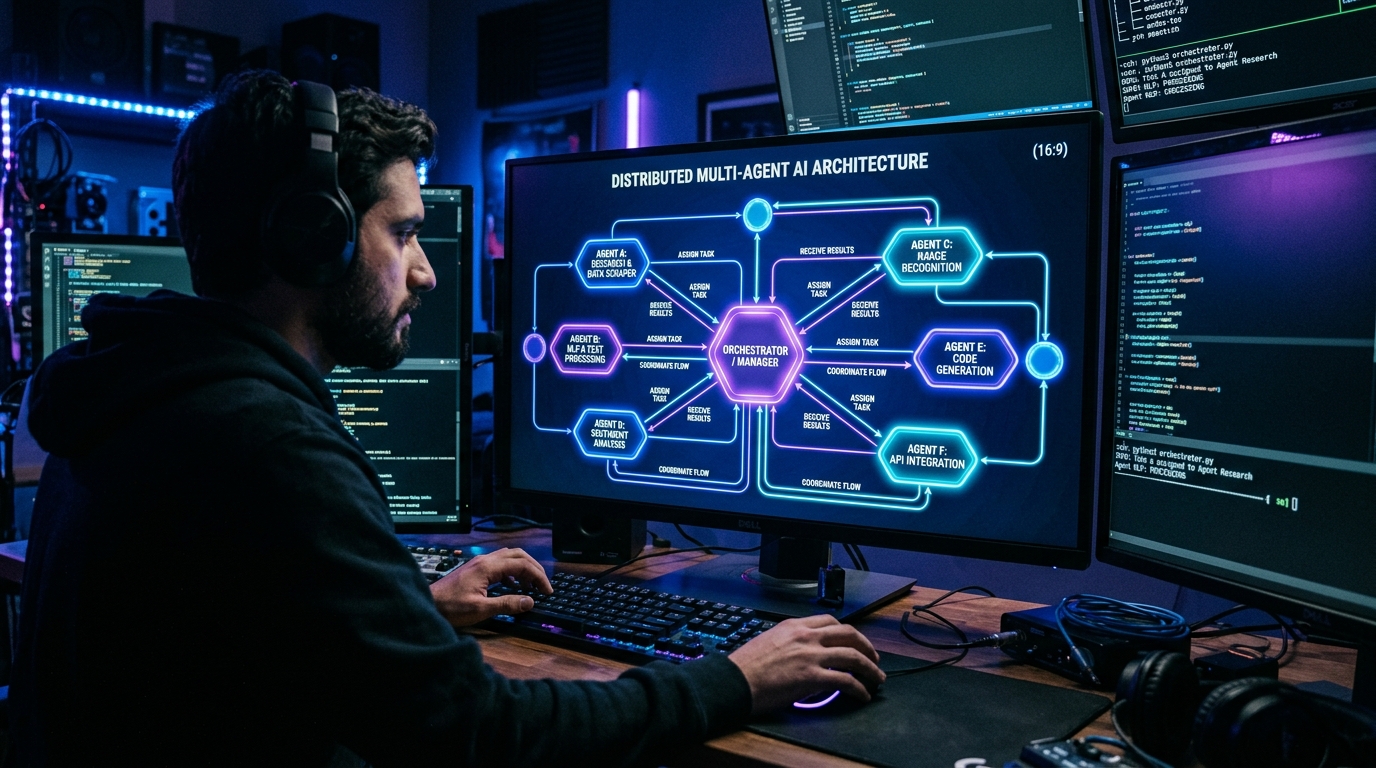
The intersection of AI agents and DePIN is where this sector gets interesting. In Q1 2026, 8–12% of total DeFi transaction volume on EVM chains came from AI agent wallets — programs with self-managed wallets, signing transactions, and executing strategies autonomously.
Here's how the stack works:
AI Agent (Eliza/Virtuals)
 → identifies compute need
 → queries DePIN marketplace (Akash/Render)
 → signs transaction with on-chain wallet
 → pays in token for GPU slot
 → executes inference/training job
 → verifies output, stores result on Filecoin/Arweave
Frameworks making this possible:
- Eliza Framework (ai16z): Used by 50%+ of new AI crypto projects in 2026. Handles digital wallets, on-chain identity, cross-chain asset management. The Generative Treasury initiative lets autonomous agents actively manage and deploy capital to generate yield.
- Virtuals Protocol — GAME: Tokenizes agent personalities. NPCs in games, AI influencers, persistent memory across platforms. In-app subscription revenue is used to buy back and burn agent tokens — deflationary supply model.
- Know Your Agent (KYA) — ERC-8004: Cryptographically signed credentials linking agents to legally accountable human sponsors. Critical as non-human identities now outnumber human employees in on-chain activity.
How to Get Started with DePIN
For developers looking to build:
# Deploy a basic Eliza agent that can use DePIN compute
git clone https://github.com/ai16z/eliza
cd eliza
cp .env.example .env
# Configure wallet and DePIN provider endpoints
npm install && npm run start
# Agent now has on-chain wallet — can bid on Akash compute
For investors evaluating projects:
- Look at protocol revenue, not token emissions or market cap. Render's $38M/mo is real. Most projects don't have it.
- Check the revenue-to-emission ratio — are token incentives subsidizing fake demand?
- Track active node counts and utilization rates. Akash at 80% GPU utilization is healthy.
- Evaluate the token burn mechanism. Akash burns $0.85 AKT per dollar spent. That's a real deflationary loop.
- Beware of pre-revenue DePIN tokens that share only the sector label with established projects.
For users wanting to earn:
- Contribute idle GPU to Akash or Render
- Run a Helium hotspot (earn HNT/MOBILE) — ~$400 hardware, $20/mo subscription model now available
- Deploy a Hivemapper dashcam — $19/mo subscription option launched in 2026
- Contribute storage to Filecoin
Risks & Challenges
DePIN is not risk-free. The sector carries structural threats:
- Hyperscaler price war: AWS/Google Cloud could cut GPU pricing to crush DePIN competitors. Margins are thin.
- Token inflation: Many DePIN projects dilute early contributors with aggressive token emissions. Check the inflation schedule.
- Regulatory uncertainty: Data scraping (Grass), wireless spectrum (Helium), and cross-border compute (Akash) all face jurisdiction-level regulatory risk. The CLARITY Act markup in May 2026 may help — or may not.
- Model quality verification: Bittensor still hasn't solved the problem of verifying AI model quality on-chain. ZKML and FHE are emerging solutions but remain experimental.
- Supply overshoot: DRN projects can add supply instantly when token prices rise, which creates downward pressure on utilization and pricing.
What's Next
The convergence of DePIN and AI agents is still early. World Economic Forum projects $3.5T+ in DePIN TAM by 2028. The key inflection points to watch in H2 2026:
- Bittensor ETF decision — could unlock massive institutional capital
- Render's AI inference API — direct competition with centralized providers
- Helium's subscriber growth — can it hit 500K?
- Agent-to-agent commerce — when agents start buying compute from other agents without human intervention
DePIN in 2026 is more real than most crypto categories. It has revenue, users, and a structural demand driver (AI compute) that isn't going away. But the sector is also maturing fast — the window for speculative plays is closing as revenue differentiation becomes the only metric that matters.
For further reading: CoinMarketCap DePIN sector view, DePINscan analytics, and the Forbes DePIN explainer.
📖 Related Reads
- NiteAgent — AI agent development, frameworks, and production patterns
- ToolBrain — tool reviews, LLM comparisons, and AI workflow guides
Cross-links automatically generated from ToolBrain.
← Back to all posts