The agent market in 2026 is flooded with frameworks that promise autonomy. Most deliver wrappers around an LLM call with a search tool bolted on.
If you are weighing Hermes Agent against the alternatives, our comparison database keeps a live scorecard of how the leading AI Agent tools stack up.
Hermes Agent stands apart because of one thing: it learns.
Not in the marketing sense of "remembers your preferences." In the real sense of creating skills from experience, refining them during use, and building a deepening model of who you are across sessions.
Here's a practical guide to how it actually works and how to use it.
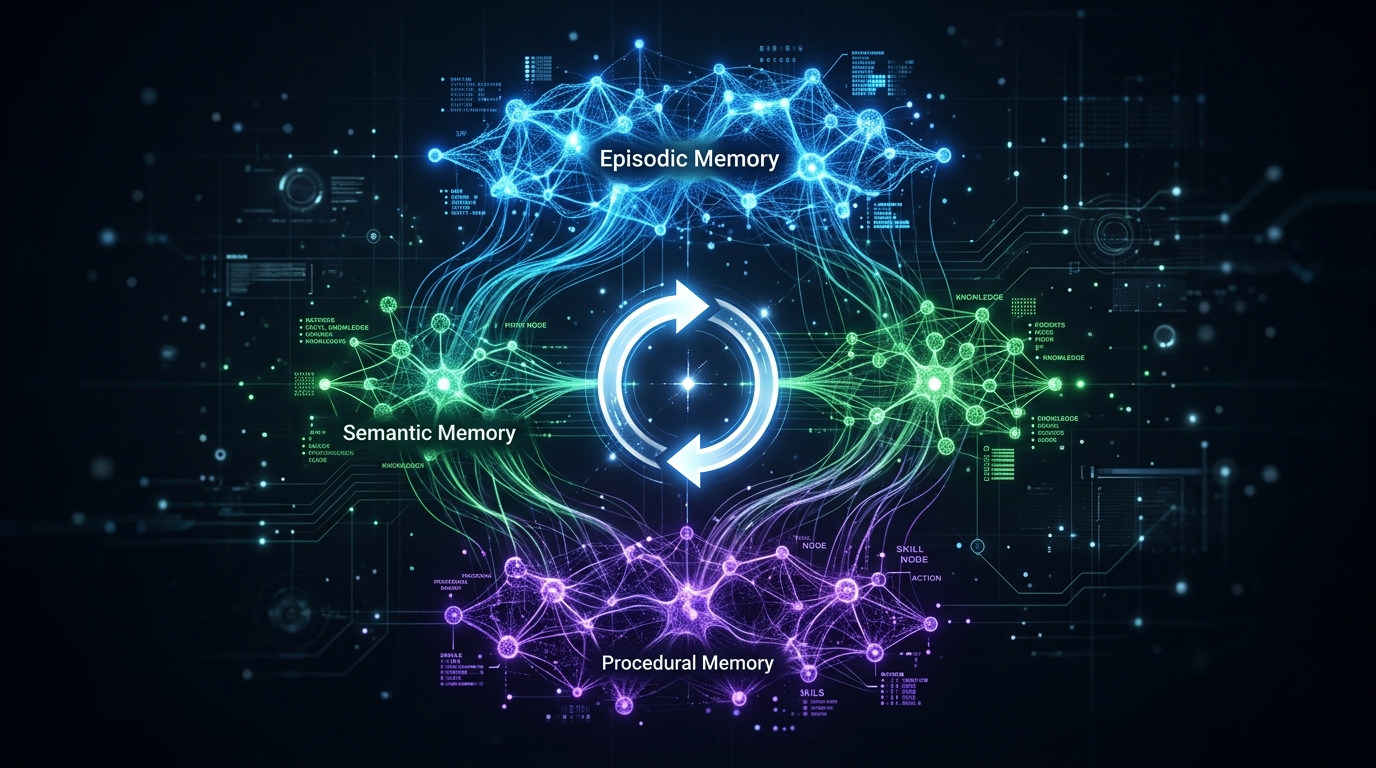
The Three Memory Layers
Hermes Agent's memory is split into three distinct systems that work together:
Episodic Memory stores raw experiences — past conversations, actions taken, results observed. It's the agent's "diary." Every interaction is logged with timestamps and outcomes.
Semantic Memory holds extracted knowledge — facts, patterns, and insights the agent has learned from its experiences. It's the agent's "reference book." Facts persist even after the specific episode is forgotten.
Procedural Memory is the skills system — reusable capabilities the agent creates and refines over time. It's the agent's "toolbox." These are executable workflows that the agent can recall and apply to new situations.
How Memory Actually Works in Practice
Here's what happens when you ask Hermes to do something new:
1. Agent receives task: "Research AI agent pricing models"
2. Episodic memory checked: Have I done this before?
3. Semantic memory checked: What do I know about this topic?
4. Procedural memory checked: Do I have a skill for research?
5. Agent executes — searches web, reads sources, takes notes
6. After completion:
 → Episode logged (episodic)
 → Key facts extracted (semantic)
 → Repeatable workflow saved as new skill (procedural)
After doing a research task once, Hermes has a dedicated skill for it. Next time you ask for similar research, it uses the refined workflow.
The Self-Improvement Loop
This is where Hermes differentiates itself from every other agent. After each task, Hermes runs a post-execution analysis:
Task Complete → Review what worked → Refine the skill → Store the insightIf a web search returned no useful results, Hermes remembers to try a different search strategy next time. If a file format conversion failed, it logs the error pattern and adjusts its approach.
The improvement happens without you doing anything. You don't write skills — Hermes creates them from observing what you ask it to do.
Setting Up Persistent Memory
Memory persistence requires some configuration. Here's a minimal working setup:
class="language-yaml"># ~/.config/hermes/config.yaml
memory:
 episodic:
 storage: sqlite
 path: ~/.hermes/memory/episodic.db
 semantic:
 storage: sqlite
 path: ~/.hermes/memory/semantic.db
 embedding_model: snowflake-arctic-embed
 procedural:
 storage: sqlite
 path: ~/.hermes/memory/procedural.db
The embedding model for semantic memory is optional but recommended. Without it, semantic recall uses keyword search only (FTS5). With embeddings, it uses hybrid search combining vector similarity and keyword matching.
Creating Your First Skill
You don't create skills manually — Hermes creates them from your interactions. But you can guide the process by asking clearly:
Example: "Research the pricing of OpenClaw alternatives and save the approach as a skill."
After running this, Hermes creates a procedural memory entry. You can see your existing skills:
class="language-bash">hermes skills list
📋 Skills (12):
 1. web_research — Multi-source research with verification
 2. data_analysis — CSV/JSON analysis with visualization
 3. file_organize — Sort files by type and content
 4. email_draft — Compose context-aware responses
 ...
Context Files: Shaping Memory
Hermes uses MEMORY.md and USER.md files (similar to OpenClaw's IDENTITY.md and SOUL.md) as structured knowledge:
class="language-markdown"># USER.md — About the User
- Name: Alex
- Timezone: America/New_York
- Preferred LLM: Claude Opus 4.7
- Communication style: Direct, prefers bullet points
Common tasks: Competitive research, data analysis, report writing
Practical Tips
Start small. Don't configure all three memory systems at once. Start with episodic only, add semantic after a week, then progressive when you have enough logged sessions.Review skills periodically. Skills can become outdated. Runhermes skills list weekly and prune anything you no longer need.Use clear task descriptions. The quality of skills Hermes creates depends on how clearly you describe the task. "Research competitors and save the approach" creates a better skill than "Look into competitors."Reset selectively. You can clear specific memory layers without losing others:
class="language-bash">hermes memory clear --episodic # Keep semantic and procedural
hermes memory clear --all # Start fresh
Why This Matters
Most AI agents in 2026 are stateless. You prompt, they respond, they forget. Hermes Agent's memory system means the agent you use in month 2 is noticeably more capable than the one you started with in month 1.Skills improve autonomously. Knowledge accumulates. Workflows get faster.This doesn't require advanced configuration. The defaults work. But understanding how the three memory layers interact lets you get the most out of the system — and build an AI that genuinely learns as it runs.
📊 See how this tool compares to alternatives
For more context, see the official documentation and provider benchmarks for the latest benchmarks and implementation guides.
Additional context is available from GitHub Copilot and Ollama updates.
Dig deeper: Hermes Agent review · OpenClaw review.
Back to all posts