From OpenAI Swarm to Agents SDK — The Evolution of Handoff-Based Multi-Agent Systems
📖 What Is the Handoff-Based Multi-Agent Pattern?
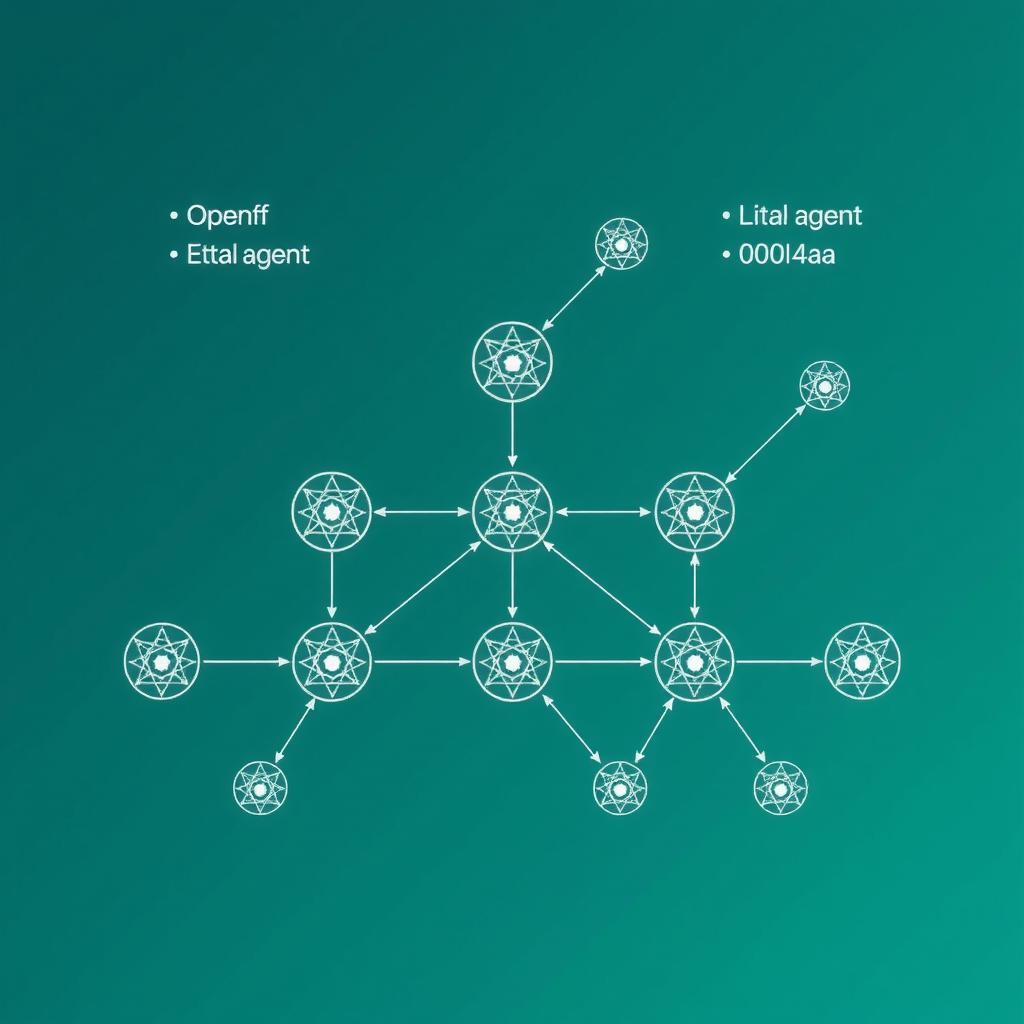
In October 2024, OpenAI released Swarm — an experimental framework whose README explicitly warned "this is not production-ready." Yet within weeks it had 15,000+ GitHub stars and became the go-to reference implementation for handoff-based multi-agent orchestration [1]. The core idea was deceptively simple: an Agent is a named entity with instructions and tools. When an agent can't handle a request, it hands off to another agent by returning an Agent object from a function call. The runtime handles the rest — switching context, routing messages, tracking the active agent.
In March 2026, OpenAI released the Agents SDK, a production-grade evolution that kept Swarm's ergonomic core while adding everything Swarm was missing: guardrails, tracing, sessions, sandbox execution, human-in-the-loop, and TypeScript support. The Swarm repository now redirects to the SDK with a single-line message: "We recommend migrating to the Agents SDK for all production use cases" [2]. The handoff pattern went from experiment to industry standard in 18 months.
This article traces that evolution — what Swarm got right, what the SDK fixed, and what the handoff pattern means for the broader multi-agent ecosystem in 2026.
📊 At a Glance & ✅ Pros & Cons
| Feature | Swarm (Oct 2024) | Agents SDK (Mar 2026) |
|---|---|---|
| Category | Experimental Multi-Agent Framework | Production Multi-Agent Framework |
| License | MIT | MIT |
| GitHub Stars | ~15K (archived) | 27K+ |
| Handoff Pattern | Function-return-Agent | Declarative handoff() |
| Guardrails | ❌ None | ✅ Input + Output guardrails |
| Tracing | ❌ None | ✅ Built-in + OpenTelemetry |
| Sandbox Agents | ❌ None | ✅ Manifest-driven containers |
| Human-in-the-Loop | ❌ None | ✅ Approval workflows |
| Async | ❌ Synchronous | ✅ Async-first (+ sync wrapper) |
| TypeScript | ❌ Community ports only | ✅ Official @openai/agents |
| Sessions | ❌ Stateless | ✅ Auto conversation history |
| Maintained | ❌ Archived | ✅ Weekly releases |
✅ What It Does Best
- Elegant handoff abstraction — The Agent-returns-Agent pattern makes multi-agent routing intuitive, composable, and easy to reason about
- Low migration friction — Swarm users can port to the SDK in 30-60 minutes thanks to shared design DNA and clear migration guides
- Production guardrails — Input/output validation, PII checks, and human-in-the-loop turn a research prototype into a deployment-ready framework
- Built-in observability — Tracing, sessions, and OpenTelemetry export give developers the debugging tools Swarm never had
- Cross-language parity — The SDK ships Python and TypeScript, while Swarm was Python-only with community Node.js ports
❌ Where It Falls Short
- Breaking changes in migration — Swarm's `functions=[]` becomes `tools=[]`, `client.run()` becomes `await Runner.run()`, breaking every existing script
- Stateless by default — Both frameworks default to stateless execution; sessions are opt-in, which catches newcomers expecting persistent memory
- Async-only SDK — The SDK is async-first with no synchronous fallback for simple scripts, adding boilerplate for quick-and-dirty experiments
- Sandbox complexity — Manifest-driven sandbox agents (v0.14+) add a significant learning curve beyond the core handoff abstraction
- API cost amplification — Handoff chains multiply token usage; what cost pennies in single-agent mode can balloon with multi-agent orchestration loops
Full hands-on review of the production Agents SDK covering sandbox execution, multi-agent orchestration, guardrails, and tracing.
LangGraph Review 2026Graph-based agent framework from LangChain. A different approach to multi-agent state management using directed graphs and persistence.
CrewAI Review 2026Role-based multi-agent orchestration framework. Uses a different metaphor — crews of agents with defined roles and goals.
ChatDev Review 2026Phase-based multi-agent collaboration framework. Agents collaborate in structured phases rather than dynamic handoffs.
✨ Capabilities & Agentic Deep Dive
The Handoff Pattern — Swarm's Innovation
Swarm's breakthrough was the Agent-return-Agent pattern. A tool function returns an Agent object instead of a string, and the runtime interprets the return value as a routing instruction. This collapsed multi-agent orchestration into a single composable abstraction: you could wire up triage agents, specialist agents, and escalation paths using nothing but Python functions and Agent constructors [3]. No state machines, no graphs, no message queues.
Declarative Handoffs — The SDK's Refinement
The Agents SDK kept the core idea but made handoffs declarative. Instead of writing boilerplate transfer functions, you declare handoffs directly on the agent: handoffs=[handoff(refund_agent), handoff(billing_agent)]. The SDK generates the routing functions automatically, validates the handoff topology at agent creation time, and surfaces handoff chains in the tracing UI [4]. This is a strict upgrade — less code, fewer bugs, more observability.
Guardrails — From Zero to Production Safety
Swarm had no safety layer. If an agent generated toxic output or received PII, there was no mechanism to intercept it. The SDK introduces input and output guardrails — lightweight agents that run before and after your main agent, checking for policy violations, PII, format mismatches, or unsafe content [5]. Guardrails can trigger triage-specific responses, block execution, or escalate to a human. This single feature transforms the SDK from a prototyping tool to a deployment platform.
Tracing — From Black Box to Observable System
Swarm's client.run() returned a list of messages. That was it. If a handoff chain had 7 agents and one of them returned the wrong output, you had no way to trace the failure. The SDK bakes in distributed tracing from day one — every agent turn, tool call, handoff, and guardrail check is recorded with timestamps, token counts, and parent-child relationships [6]. Traces can be viewed in OpenAI's hosted UI or exported via OpenTelemetry to any observability platform (Datadog, Grafana, Langfuse).
Sandbox Agents — From Stateless to Stateful Execution
The SDK's v0.14.0 release introduced sandbox agents — containerized execution environments defined by a declarative Manifest. Each agent gets an isolated workspace with exactly the files, dependencies, and tools it needs. State is snapshotted on exit and rehydrated on resume [7]. This is something Swarm couldn't even approximate — Swarm was fundamentally stateless, with no mechanism for durable execution, file persistence, or environment isolation.
Human-in-the-Loop — From Full Autonomy to Controlled Execution
Swarm assumed full agent autonomy — once you called client.run(), the agent chain ran to completion. The SDK introduces human-in-the-loop approval workflows that pause execution at configurable checkpoints: before executing expensive tool calls, before handing off to a sensitive agent, or before finalizing output [8]. This is critical for regulated industries (healthcare, finance, legal) where agent decisions require human sign-off.
🔬 AI Performance Analysis
🦾 Ease of Use
Swarm's API surface was tiny — two classes (Swarm, Agent), one method (client.run()), and one pattern (return an Agent from a function). Anyone who understood Python functions could build multi-agent systems in minutes. The SDK retains this simplicity for basic cases but layers on guardrails, sandbox manifests, and tracing configuration that add real complexity. A basic triage agent is still 30 lines of code; a production-grade system with safety checks, error handling, and observability is 200+. The tradeoff is justified — simple APIs produce simple failures — but the learning curve is noticeably steeper.
⚙️ Features
This is where the evolution is most dramatic. Swarm had two features: agents and handoffs. The SDK has agents, handoffs, guardrails, tracing, sessions, sandbox execution, human-in-the-loop, hosted tools, realtime agents, and a plugin system. Swarm was a proof of concept; the SDK is a platform. The handoff pattern itself is the connective tissue — every feature in the SDK is designed to compose with handoffs, not replace them. Guardrails run before and after handoff execution. Tracing traces handoff chains. Sessions persist handoff history. The pattern scales from two-agent demos to hundred-agent workflows without architectural change.
🚀 Performance
Swarm's synchronous architecture was simple but blocking — one handoff at a time, no parallelism, no streaming state. The SDK's async-first design unlocks concurrent agent execution, streaming responses, and non-blocking guardrail checks. Sandbox agents add container overhead (500ms-2s provisioning time) but enable workloads Swarm couldn't touch: code execution, file processing, browser automation. The tradeoff is real — simple handoff chains run slower on the SDK due to async overhead — but for production workloads the performance characteristics are dramatically better.
📚 Documentation
Swarm's documentation was a single README with six examples. It was exactly enough for an experimental project — and exactly not enough for production adoption. The SDK has comprehensive docs covering every feature: quickstart, migration guide from Swarm, guardrail configuration guide, sandbox manifest reference, tracing setup, and API reference for Python and TypeScript. The migration guide in particular is excellent — it maps every Swarm concept to its SDK equivalent with side-by-side code and a clear migration checklist [9]. The SDK's docs aren't perfect (some advanced sandbox features have sparse coverage), but the improvement over Swarm is night and day.
🎯 Support
Swarm had no support — it was an experimental side project from OpenAI's Solutions team with no maintenance commitment, no issue SLA, and no roadmap. The SDK has OpenAI's engineering team behind it, weekly releases, an active GitHub community (27K+ stars, 4.2K forks, 296 contributors), and integration with OpenAI's developer support for Enterprise customers. The community Discord and GitHub Discussions are reasonably active. The SDK still lacks a dedicated community forum or Stack Overflow presence, but for an open-source project backed by a major vendor, the support posture is solid.
🎯 Ideal Use Cases
✅ Best For
|
❌ Not Ideal For
|
Both Swarm and the Agents SDK are free, open source, and MIT-licensed [2]. The SDK adds zero direct costs — you only pay for the OpenAI API tokens consumed by your agents. For local development, you can use the SDK with any OpenAI-compatible endpoint (OpenRouter, Together, local models via Ollama). Sandbox agents add optional infrastructure costs if using cloud providers (E2B, Modal) instead of local Docker.
Quick start: Install via pip → define your agents with instructions and handoffs → run with Runner.run() → add guardrails for safety → wire tracing for observability.
| ❓ FAQ | |
|---|---|
| Is OpenAI Swarm still maintained? | No. OpenAI officially deprecated Swarm in March 2026 when the Agents SDK reached v1.0. The Swarm repository now redirects to the Agents SDK with a clear recommendation to migrate. No new features, bug fixes, or security patches will be released for Swarm. |
| What is a handoff in multi-agent systems? | A handoff is a mechanism where one AI agent passes control and conversation context to another agent. In Swarm, this was done by returning an Agent object from a function. In the Agents SDK, handoffs are declared declaratively via the handoff() helper on the parent agent definition. |
| Can I still use Swarm's API style with the Agents SDK? | Partially. The core concept is the same — agents with instructions and tools — but the SDK moved from synchronous client.run() to async Runner.run(), renamed functions to tools, and added structured run results. A thin compatibility wrapper could bridge the gap, but OpenAI recommends full migration. |
| What did the Agents SDK add that Swarm was missing? | Guardrails (input/output validation), tracing (OpenTelemetry + OpenAI UI), sessions (auto conversation history), hosted tools (web search, code interpreter), sandbox agents (containerized execution), human-in-the-loop approvals, and async-by-default architecture. Swarm had none of these. |
| How long does it take to migrate from Swarm to the Agents SDK? | For simple triage-agent patterns, about 30-60 minutes. For complex workflows with context variables, dynamic instructions, and streaming, expect an evening. Adding guardrails and tracing is the time-consuming part — worth it for production deployments. |
| 📖 Related Reads | |
|---|---|
| OpenAI Agents SDK Review 2026 | Full hands-on review of the production Agents SDK covering sandbox, handoffs, guardrails, and tracing. |
| LangGraph Review 2026 | Graph-based multi-agent framework. A different approach to agent state management. |
| CrewAI Review 2026 | Role-based multi-agent orchestration — the most popular alternative to OpenAI's handoff pattern. |
| ChatDev Review 2026 | Phase-based multi-agent collaboration — structured phases instead of dynamic handoffs. |
| 📚 Verification & Citations | |
|---|---|
| https://github.com/openai/swarm | OpenAI Swarm GitHub Repository — the original experimental framework. Accessed June 2026. |
| https://github.com/openai/openai-agents-python | OpenAI Agents SDK GitHub Repository — production evolution with 27K+ stars. Accessed June 2026. |
| https://community.openai.com/t/openai-swarm-for-agents-and-agent-handoffs/976579 | OpenAI Developer Community — early discussion of Swarm's handoff mechanism. Accessed June 2026. |
| https://developers.openai.com/api/docs/guides/agents | OpenAI Agents SDK Official Documentation — handoff configuration, guardrails, tracing setup. Accessed June 2026. |
| https://www.respan.ai/articles/openai-agents-sdk-vs-swarm | Respan.ai Migration Guide — comprehensive side-by-side comparison with code examples and migration checklist. Accessed June 2026. |
| https://medium.com/@anumriz2017/from-swarm-to-synergy-how-openais-swarm-evolved-into-the-agents-sdk-66487a83e602 | Medium Article — "From Swarm to Synergy" by Anum Kamal covering the evolution narrative. Accessed June 2026. |
| https://galileo.ai/blog/openai-swarm-framework-multi-agents | Galileo AI Guide — deep dive on Swarm's handoff and routing architecture. Accessed June 2026. |
| https://developers.openai.com/cookbook/examples/agents_sdk/multi-agent-portfolio-collaboration | OpenAI Cookbook — multi-agent portfolio collaboration using agents-as-tool and handoff patterns. Accessed June 2026. |
The Agents SDK reaches production readiness with guardrails, tracing, and sandbox agents. Swarm officially deprecated with redirect to the SDK.
@openai/agents npm package reaches v1.0, bringing handoff-based multi-agent orchestration to Node.js and TypeScript ecosystems.
Manifest-driven containerized agent execution with snapshot/resume, transforming stateless handoff chains into durable, stateful workflows.
- June 12, 2026: Published evolution comparison — handoff pattern from Swarm to Agents SDK.
📖 Related Reads
- NiteAgent — AI agent development, frameworks, and production patterns
- NoCode Insider — AI workflow automation with no-code tools, agents, and APIs
- ToolBrain — tool reviews, LLM comparisons, and AI workflow guides
- CodeIntel Log — code quality, debugging, and software engineering benchmarks
Cross-links automatically generated from None.
Is OpenAI Swarm still maintained?
No. OpenAI officially deprecated Swarm in March 2026 when the Agents SDK reached v1.0. The Swarm repository now redirects to the Agents SDK with a clear recommendation to migrate. No new features, bug fixes, or security patches will be released for Swarm.
What is a handoff in multi-agent systems?
A handoff is a mechanism where one AI agent passes control and conversation context to another agent. In Swarm, this was done by returning an Agent object from a function. In the Agents SDK, handoffs are declared declaratively via the handoff() helper on the parent agent definition.
Can I still use Swarm's API style with the Agents SDK?
Partially. The core concept is the same — agents with instructions and tools — but the SDK moved from synchronous client.run() to async Runner.run(), renamed functions to tools, and added structured run results. A thin compatibility wrapper could bridge the gap, but OpenAI recommends full migration.
What did the Agents SDK add that Swarm was missing?
Guardrails (input/output validation), tracing (OpenTelemetry + OpenAI UI), sessions (auto conversation history), hosted tools (web search, code interpreter), sandbox agents (containerized execution), human-in-the-loop approvals, and async-by-default architecture. Swarm had none of these.
How long does it take to migrate from Swarm to the Agents SDK?
For simple triage-agent patterns, about 30-60 minutes. For complex workflows with context variables, dynamic instructions, and streaming, expect an evening. Adding guardrails and tracing is the time-consuming part — worth it for production deployments.