CrewAI Review 2026: The Multi-Agent Orchestration Framework Powering Enterprise AI
📖 What Is CrewAI?
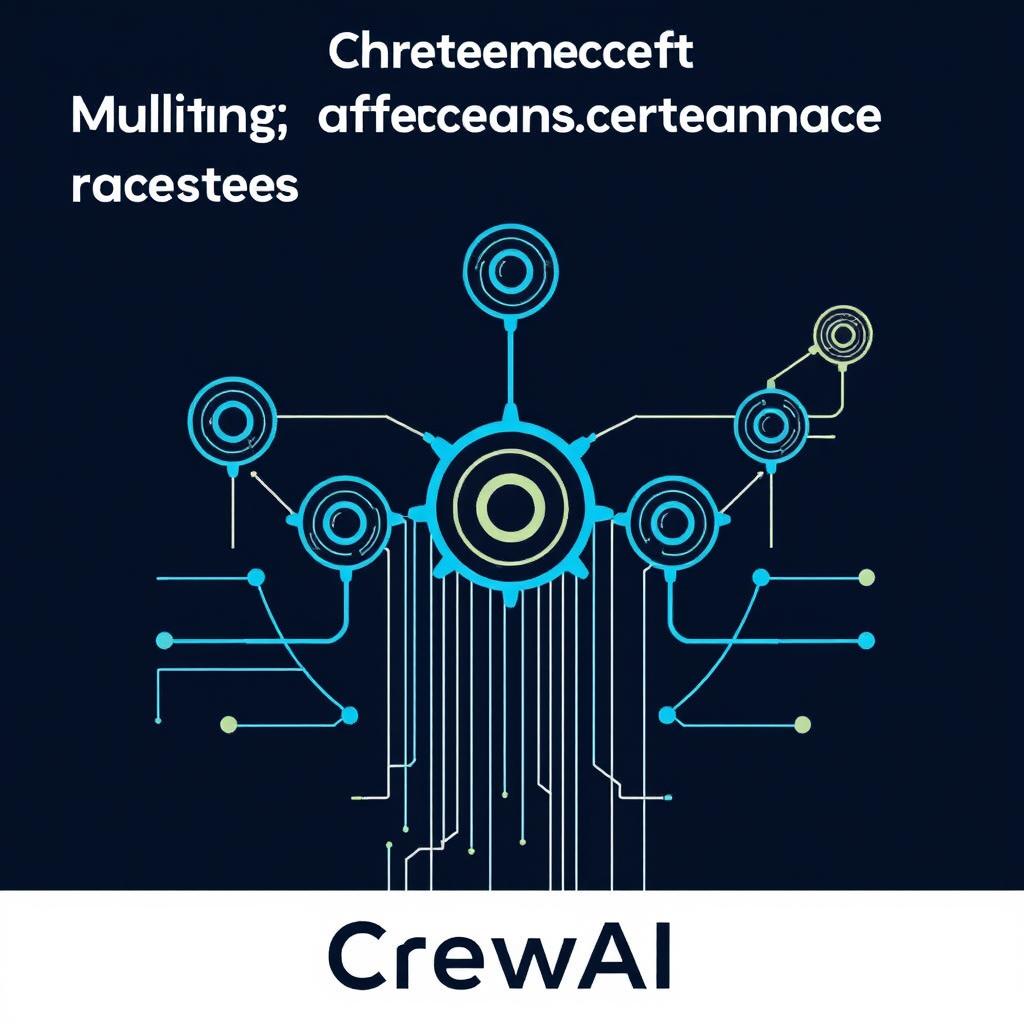
CrewAI is an open-source multi-agent orchestration framework that lets you build teams of autonomous AI agents. Instead of scripting brittle chains of LLM calls, you define agents by role, goal, and backstory — like hiring a Researcher, a Writer, and an Analyst — and CrewAI handles how they collaborate, delegate, and produce output.
Launched in 2024 and based in San Francisco, CrewAI has grown from 2,800 GitHub stars in January 2024 to over 52,700 stars by June 2026 [1]. It's used by 63% of the Fortune 500 including DocuSign, IBM, PwC, and Johnson & Johnson, processing over 450M agentic workflows per month across its platform [2].
The framework has two core concepts: Crews — autonomous role-based agent teams with flexible collaboration — and Flows — event-driven, deterministic pipelines for production workflows that need precise state management and auditability. Since version 1.14, CrewAI is fully standalone, with zero dependency on LangChain or other agent frameworks [3].
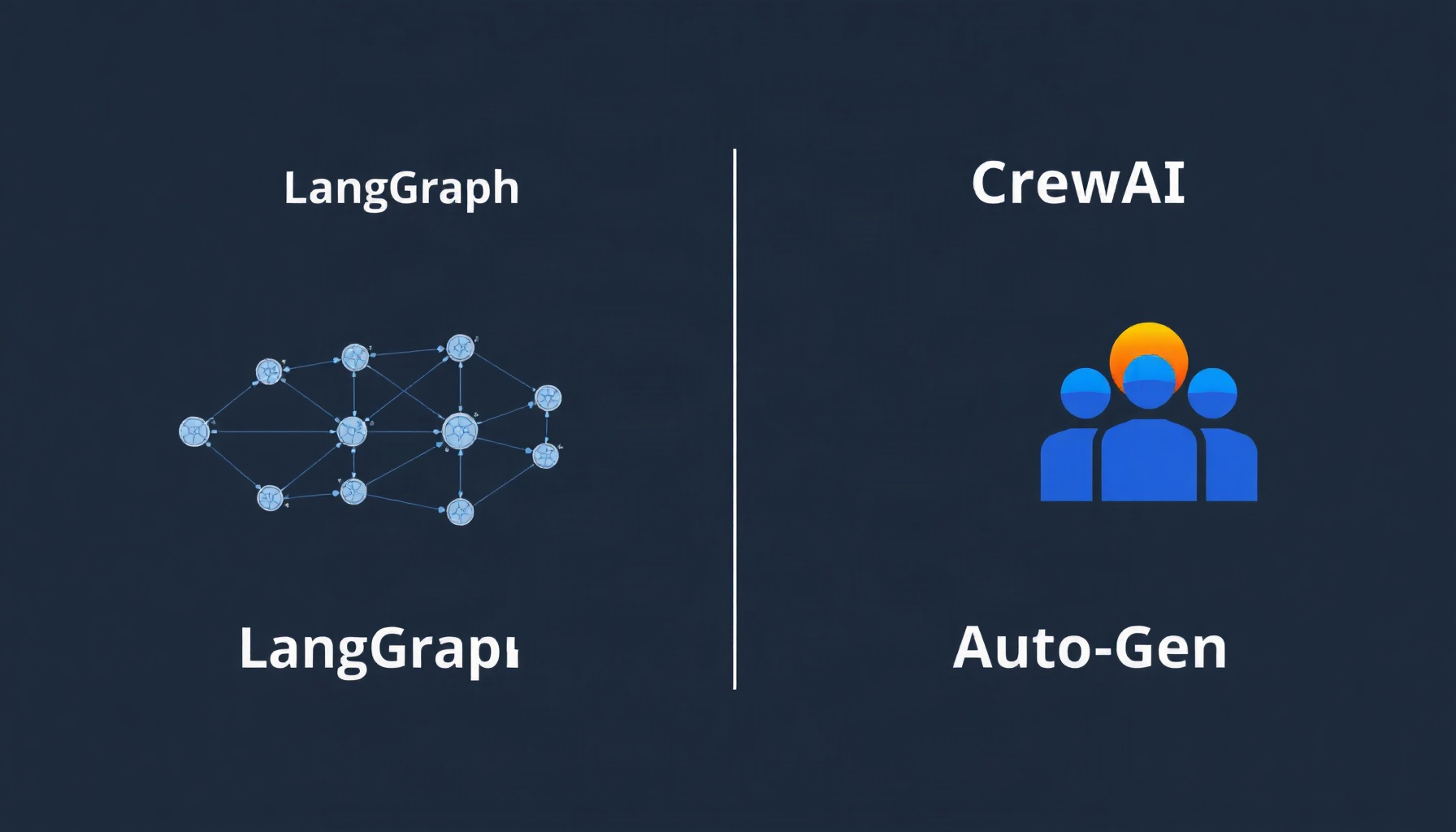
In 2026, CrewAI sits at the center of the multi-agent framework conversation alongside LangGraph (47M+ monthly downloads) and AutoGen (AG2, 42K stars), each taking a different philosophical approach to agent orchestration [4].
📊 At a Glance & ✅ Pros & Cons
| Feature | CrewAI 2026 | LangGraph | AutoGen (AG2) |
|---|---|---|---|
| Category | Multi-Agent Framework | Multi-Agent Framework | Multi-Agent Framework |
| Pricing (Cloud) | $29/mo (1K runs) | $49/mo (1 deploy) | Azure consumption |
| Free Tier | ✅ MIT open-source | ✅ MIT open-source | ✅ MIT open-source |
| Language | Python only | Python (+ TS beta) | Python |
| Abstraction | Role-based Crews | State graph | Event-driven |
| Visual Builder | ✅ CrewAI Studio | ❌ LangGraph Studio | ❌ AG2 Studio |
| Local LLM | ✅ Ollama support | ✅ Deep integration | ✅ Configurable |
✅ What It Does Best
- Role-based agent architecture — Intuitive Crews abstraction makes multi-agent orchestration natural for Python developers
- Framework-independent — Fully standalone since v1.14, no LangChain dependency, 5.76x faster than LangGraph on QA tasks
- Enterprise adoption — 63% of the Fortune 500, 12M+ workflows/month, production-proven at scale
- Two modes for the price of one — Autonomous Crews for flexibility, deterministic Flows for production pipelines
- Generous open-source — Full MIT-licensed framework, unlimited use, 60+ built-in tools included
❌ Where It Falls Short
- Python-only SDK — No TypeScript, Go, or other language bindings lock out non-Python teams
- Steep Flow learning curve — Event-driven pipelines require understanding state management and conditional routing
- AMP pricing opaque — Enterprise cloud pricing is hidden behind sales calls; no transparent self-serve tier
- Complex task reliability — Benchmarks show 54% success on 8+ step complex tasks vs 62% for LangGraph
- Observability paywalled — No built-in tracing, monitoring, or guardrails in the free open-source framework
AI agent platform with prompt engineering, evaluation, and deployment tools. Strong for teams that need LLMOps alongside orchestration.
Hermes AgentFree open-source AI agent with multi-agent support and MCP integration. A lighter-weight alternative for solo developers.
OpenAI SymphonyOpenAI's multi-agent orchestration system. Cloud-native with deep GPT integration.
OpenClawOpen-source AI agent framework focused on local-first deployment with multi-agent support.
ML InternFree AI agent framework with strong multi-agent orchestration capabilities. Good for ML-focused workflows.
AutoGPTPioneering autonomous agent framework. Now lagging behind newer frameworks in reliability and features.
✨ Capabilities & Agentic Deep Dive
Crews — Role-Based Autonomous Agents
Crews are the heart of CrewAI. You define agents with a role, goal, and backstory — for example, a "Senior Market Researcher" with the goal of "gathering competitive intelligence" and the backstory of "10 years in tech market analysis." Agents can be equipped with tools like web search, code execution, or API calls. The framework handles task delegation, inter-agent communication, and output aggregation automatically. Tasks can run sequentially, hierarchically, or in parallel depending on the process configuration [5].
Flows — Deterministic Event-Driven Pipelines
Flows complement Crews with a fundamentally different paradigm. Instead of autonomous agent collaboration, Flows are event-driven, state-managed pipelines with explicit conditional branching, loops, error handling, and structured state via Pydantic models. You define a Flow as a class with decorated methods — @start(), @listen(), @router() — and the framework executes them in sequence based on events. This is the production-grade mode for workflows that need audit trails, reproducibility, and strict state control [3].
CrewAI Studio — Visual Workflow Builder
CrewAI Studio is a drag-and-drop visual editor that lets non-engineers build multi-agent workflows without writing code. You create agents visually, connect them in sequences or parallel branches, and the editor generates exportable Python code. An AI copilot assists with modifications — for example, changing a Slack integration to Gmail automatically. Studio is cloud-only and part of the AMP platform [2].
AMP — Agent Management Platform
The AMP is CrewAI's enterprise cloud offering. It adds: real-time tracing of every LLM call, tool call, and memory read with cost accounting; RBAC and audit trails for compliance; human-in-the-loop gates for approval workflows; PII masking and guardrails at every LLM/tool call; and dedicated VPC deployment for sensitive workloads. AMP supports SSO (MS Entra, Okta) and is SAM-certified with FedRAMP High authorization for government use [2].
Memory & Knowledge Systems
CrewAI offers a hierarchical memory system with short-term, long-term, and entity memory backended by Qdrant Edge for vector storage. The Agentic RAG Knowledge System ingests files, websites, and vector databases to ground agents in your proprietary data. Runtime checkpointing ensures agents can recover from failures mid-workflow [3].
Tool Ecosystem & Integrations
CrewAI ships with 60+ built-in tools covering web search (Tavily, SerperDev, You.com), file I/O, code execution, SQL databases, CRM integrations (Gmail, Slack, Salesforce, HubSpot), and MCP (Model Context Protocol) adapters for extending tool access. The framework also supports the A2A protocol for agent-to-agent communication across platforms [2].
🔬 AI Performance Analysis
🦾 Ease of Use
CrewAI's role-based agent abstraction is genuinely intuitive for Python developers. You define an agent with a role, goal, and backstory in YAML — it reads like natural language. The CLI tool (crewai create crew) scaffolds an entire project structure in seconds. However, two things raise the bar: Flows require understanding event-driven state management, and the YAML + Python + decorator pattern can be confusing for newcomers. If you're not a Python developer, CrewAI is simply not accessible. The open-source framework also has zero built-in observability, so debugging failures means reading raw LLM output.
⚙️ Features
CrewAI's feature set is the richest among open-source multi-agent frameworks. Crews cover flexible collaboration; Flows cover deterministic production pipelines. The memory hierarchy (short-term, long-term, entity) with Qdrant backend is production-grade. The 60+ built-in tools, MCP adapters, A2A protocol support, and LLM provider agnosticism (OpenAI, Anthropic, Groq, Ollama, OpenRouter, Cerebras) make it genuinely flexible. CrewAI Studio adds visual no-code building for non-engineers. The only missing piece is multi-language support — Python-only limits adoption in TypeScript-first or Go-first organizations.
🚀 Performance
CrewAI's standalone architecture delivers real speed advantages — GitHub benchmarks claim 5.76x faster than LangGraph on QA tasks [3]. On simple single-tool-call tasks, CrewAI scores ~88% success rates alongside its peers [4]. Where it falls behind is complex multi-step workflows: on 8+ step tasks, CrewAI achieves 54% success vs 62% for LangGraph and 58% for AutoGen [4]. This means for straightforward agent pipelines, CrewAI is the fastest option; for intricate multi-step processes with tight reliability requirements, LangGraph edges ahead. Memory management in long multi-step workflows can also become fragile, requiring careful prompt engineering and agent definition.
📚 Documentation
CrewAI's documentation covers the full framework — getting started guides, API references, YAML configuration, Flows vs Crews decision trees, and deployment patterns. Over 100,000 certified developers have completed CrewAI's learning track at learn.crewai.com [3]. The GitHub README is comprehensive with clear code examples. DeepLearning.AI offers a dedicated CrewAI course. Where docs fall short: AMP pricing, enterprise deployment specifics, and production scaling guidance are gated behind sales calls. The changelog is transparent about releases, and the community Discord is active with real-time help.
🎯 Support
CrewAI's community support is strong — 52,700 GitHub stars, an active Discord server, and Reddit presence. The core team pushes releases weekly and is responsive to GitHub issues. Enterprise AMP customers get priority support with dedicated CSMs. The gap: free open-source users have no formal support channel beyond community forums. The Enterprise pricing call-out model means teams evaluating CrewAI at scale can't self-serve their way to a quote. The 100K+ certified developer community partially offsets this, but for production incidents, you're either on an enterprise plan or relying on community goodwill.
🎯 Ideal Use Cases
✅ Best For
|
❌ Not Ideal For
|
Open-source framework is MIT-licensed — pay only for LLM API calls. AMP Cloud starts at $29/month for 1,000 workflow executions. Enterprise plans with dedicated VPC, SSO, and FedRAMP compliance are custom-priced.
Quick start: uv tool install crewai && crewai create crew my_project && crewai run — a two-agent research team running in under 5 minutes with free LLM trial credits.
| Overall Score | 7.8/10 |
|---|
| ❓ FAQ | |
|---|---|
| What is CrewAI and how does it work? | CrewAI is an open-source Python framework for orchestrating teams of autonomous AI agents. You define agents with roles, goals, and backstories, assign them tasks, and CrewAI handles the collaboration — agents delegate, communicate, and execute in sequence or parallel. It also offers Flows, an event-driven pipeline system for deterministic production workflows. |
| Is CrewAI free to use? | Yes — the core CrewAI framework is MIT-licensed and completely free. You only pay for LLM API usage (OpenAI, Anthropic, Ollama, etc.) and hosting. The AMP cloud platform adds managed infrastructure, monitoring, and a visual studio editor starting at $29/month for 1,000 workflow executions. |
| How does CrewAI compare to LangGraph? | CrewAI excels at rapid prototyping with its role-based abstraction — you can ship a multi-agent system in hours. LangGraph offers more precise state management and achieves 62% vs 54% on complex 8+ step benchmarks. CrewAI executes 5.76x faster on simple QA tasks. Choose CrewAI for development speed; LangGraph for production compliance. |
| Can CrewAI run with local LLMs via Ollama? | Yes. CrewAI supports any OpenAI-compatible provider including Ollama, vLLM, DeepSeek, and OpenRouter. You can run entirely offline with models like Qwen3 32B. Local hardware needs 40GB+ RAM for complex multi-agent setups with 32B+ models. |
| Does CrewAI support visual workflow building? | Yes — CrewAI Studio is a drag-and-drop visual editor for building multi-agent workflows without code. It's part of the AMP cloud platform and can export workflows to Python code for deployment. It includes AI-assisted suggestions that can auto-modify your workflow. |
| 📖 Related Reads | |
|---|---|
| Vellum Review 2026 | AI agent platform with LLMOps, evaluation, and deployment — strong complement to CrewAI's orchestration. |
| Hermes Agent Review 2026 | Free open-source AI agent with multi-agent support. Lighter alternative for solo developers. |
| OpenAI Symphony Review 2026 | OpenAI's native multi-agent orchestration. Cloud-only but deeply integrated with GPT models. |
| OpenClaw Review 2026 | Open-source local-first AI agent framework with multi-agent capabilities. |
| 📚 Verification & Citations | |
|---|---|
| https://crewai.com | CrewAI Official Website — product features, pricing, case studies. Accessed June 2026. |
| https://github.com/crewaiinc/crewai | CrewAI GitHub Repository — 52.7K stars, v1.14.6, standalone architecture. Accessed June 2026. |
| https://docs.crewai.com | CrewAI Documentation — quickstart guides, API reference, Crews vs Flows. Accessed June 2026. |
| https://pooya.blog/blog/crewai-vs-langgraph-autogen-comparison-2026/ | CrewAI vs LangGraph vs AutoGen 2026 Benchmarks — GitHub stars, pricing, complex task success rates. Accessed June 2026. |
| https://qubittool.com/blog/ai-agent-framework-comparison-2026 | 2026 AI Agent Framework Showdown — architecture comparisons across 6 frameworks. Accessed June 2026. |
| https://cybernews.com/ai-tools/crewai-review/ | Cybernews CrewAI Review 2026 — features, pricing, pros/cons, AMP breakdown. Accessed June 2026. |
| https://aicloudbase.com/tool/crewai | AI Gear Base CrewAI Review — security features, compliance, enterprise deployment. Accessed June 2026. |
CrewAI was featured in ByteByteGo's analysis of top AI GitHub repositories of 2026, highlighting its multi-agent orchestration framework used by 63% of the Fortune 500.
CrewAI shipped v1.14 removing all LangChain dependencies, making the framework fully standalone. Performance benchmarks show 5.76x faster execution on QA tasks compared to LangGraph.
CrewAI reached 50,000 GitHub stars, cementing its position as one of the fastest-growing open-source agent frameworks, up from 2,800 stars in January 2024 — a 1,686% increase.
CrewAI's enterprise AMP platform received FedRAMP High authorization, enabling government and regulated industry deployments with dedicated VPC networking.
- June 2, 2026: Initial published review — v4 canonical format with 14-section pattern, performance analysis, verdict banner, and alt-grid cross-links.
📖 Related Reads
- NiteAgent — AI agent development, frameworks, and production patterns
- ToolBrain — tool reviews, LLM comparisons, and AI workflow guides
- CodeIntel Log — code quality, debugging, and software engineering benchmarks
- Hermes Tutorials — Hermes Agent setup, configuration, and advanced workflows
- NoCode Insider — AI workflow automation with no-code tools, agents, and APIs
Cross-links automatically generated from None.
What is CrewAI and how does it work?
CrewAI is an open-source Python framework for orchestrating teams of autonomous AI agents. You define agents with roles, goals, and backstories, assign them tasks, and CrewAI handles the collaboration — agents delegate, communicate, and execute in sequence or parallel. It also offers Flows, an event-driven pipeline system for deterministic production workflows.
Is CrewAI free to use?
Yes — the core CrewAI framework is MIT-licensed and completely free. You only pay for LLM API usage (OpenAI, Anthropic, Ollama, etc.) and hosting. The AMP cloud platform adds managed infrastructure, monitoring, and a visual studio editor starting at $29/month for 1,000 workflow executions.
How does CrewAI compare to LangGraph?
CrewAI excels at rapid prototyping with its role-based abstraction — you can ship a multi-agent system in hours. LangGraph offers more precise state management and achieves 62% vs 54% on complex 8+ step benchmarks. CrewAI executes 5.76x faster on simple QA tasks. Choose CrewAI for development speed; LangGraph for production compliance.
Can CrewAI run with local LLMs via Ollama?
Yes. CrewAI supports any OpenAI-compatible provider including Ollama, vLLM, DeepSeek, and OpenRouter. You can run entirely offline with models like Qwen3 32B. Local hardware needs 40GB+ RAM for complex multi-agent setups with 32B+ models.
Does CrewAI support visual workflow building?
Yes — CrewAI Studio is a drag-and-drop visual editor for building multi-agent workflows without code. It's part of the AMP cloud platform and can export workflows to Python code for deployment. It includes AI-assisted suggestions that can auto-modify your workflow.